Vinyl Privacy Fence Styles and Heights, Explained
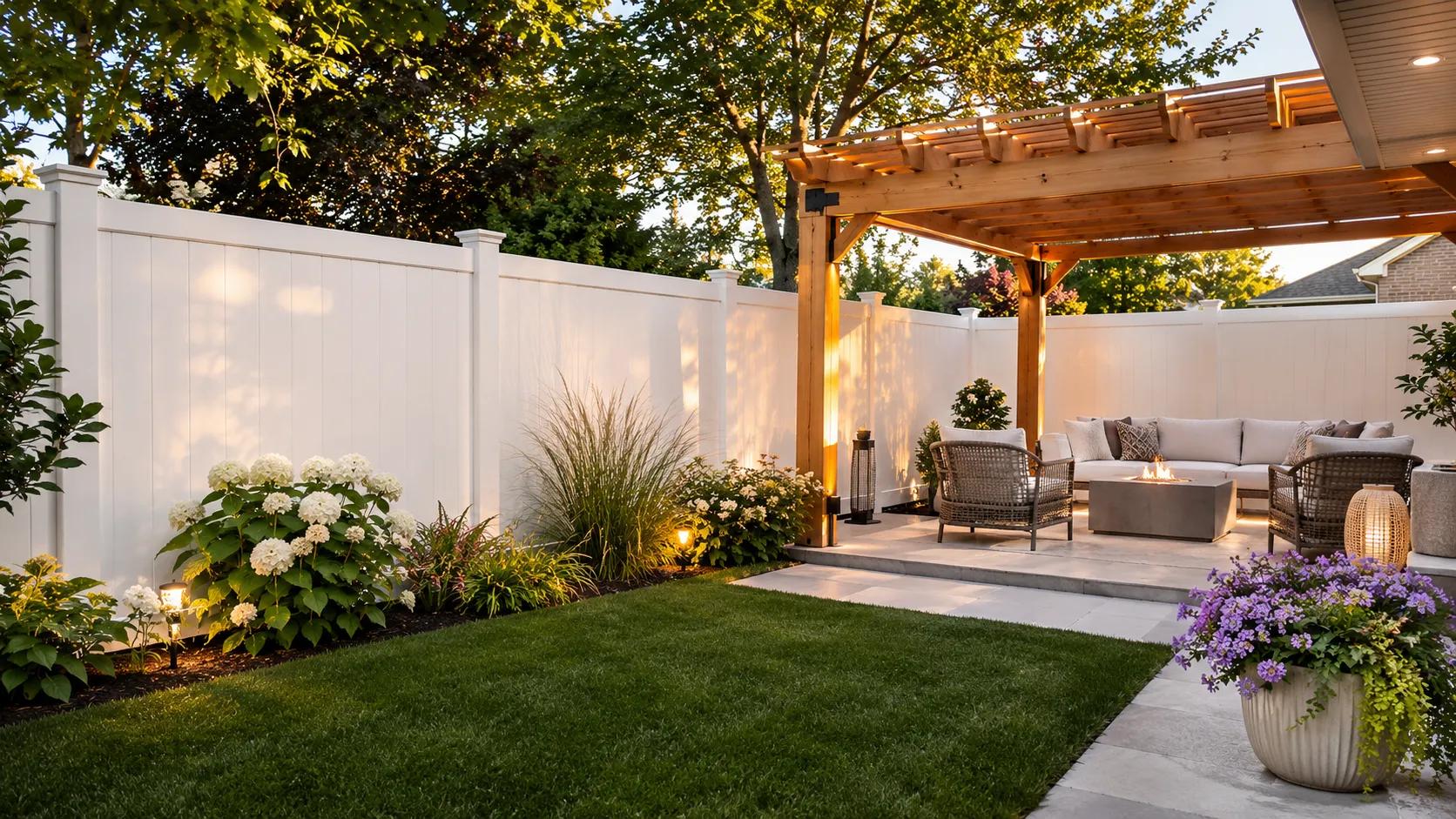
A vinyl privacy fence is a solid-panel PVC fence with no sightline through it, built to fully screen a yard from neighbours or the street. PrimeAlux offers it alongside a semi-privacy version with spaced panels for a more open look. This guide covers how the two differ, what height actually accomplishes, and how to decide between them.
Key facts
- A privacy fence uses solid panels with no gap to see through.
- A semi-privacy fence uses spaced panels that allow some airflow and partial visibility while still screening most of a direct sightline.
- Front yard limits are lower everywhere.
Explore current styles and request pricing
PrimeAlux prices vinyl fencing by quote rather than listing fixed prices, so the fastest way to see current styles and request pricing for your project is directly through PrimeAlux's vinyl privacy fence.
What's the difference between privacy and semi-privacy vinyl fencing?
A privacy panel is solid, edge to edge, so there's no gap to see through. A semi-privacy panel is spaced, which lets air and partial light through while still screening most of a direct sightline. The choice usually comes down to how much airflow matters versus how completely the yard needs to be blocked from view.
What height should a vinyl privacy fence be?
Height is mostly a function of what the fence needs to block and what your local municipality allows in your yard's zone. A fence tall enough to block a ground-level sightline from an adjacent yard won't necessarily block a view from a neighbouring second-storey window; blocking that line of sight generally requires more height or a different approach (screening, landscaping) altogether. There's no single Canadian figure worth relying on here: Calgary and Edmonton generally cap side/rear yards at 2.0 metres, Toronto's enforcement records describe a 2.0 metre rear-yard maximum, and Regina's current published standard caps the same yards at 2.14 metres (2.44 metres near an arterial street) with a lower 1.22 metre front-yard limit. Figures and measurement methods vary by city, so check your specific municipality's current bylaw rather than assuming a national range.
Aluminum fencing from PrimeAlux
Planning for the long term? Choose aluminum.
- Aluminum does not rust or rot
- Limited warranty of up to 20 years
- Four standard colours
- Class A rated for fire and smoke - ASTM E84 (Privacy Slat | Flame Spread Index 0, Smoke Developed Index 50)
- 220 km/h wind rating (Privacy Plus | posts set underground, not base plate mounting)
- ASTM E90 | Acoustic Performance (Privacy Plus (6'W × 6'H) | STC 22 · OITC 19)
How does the panel hold its shape over time?
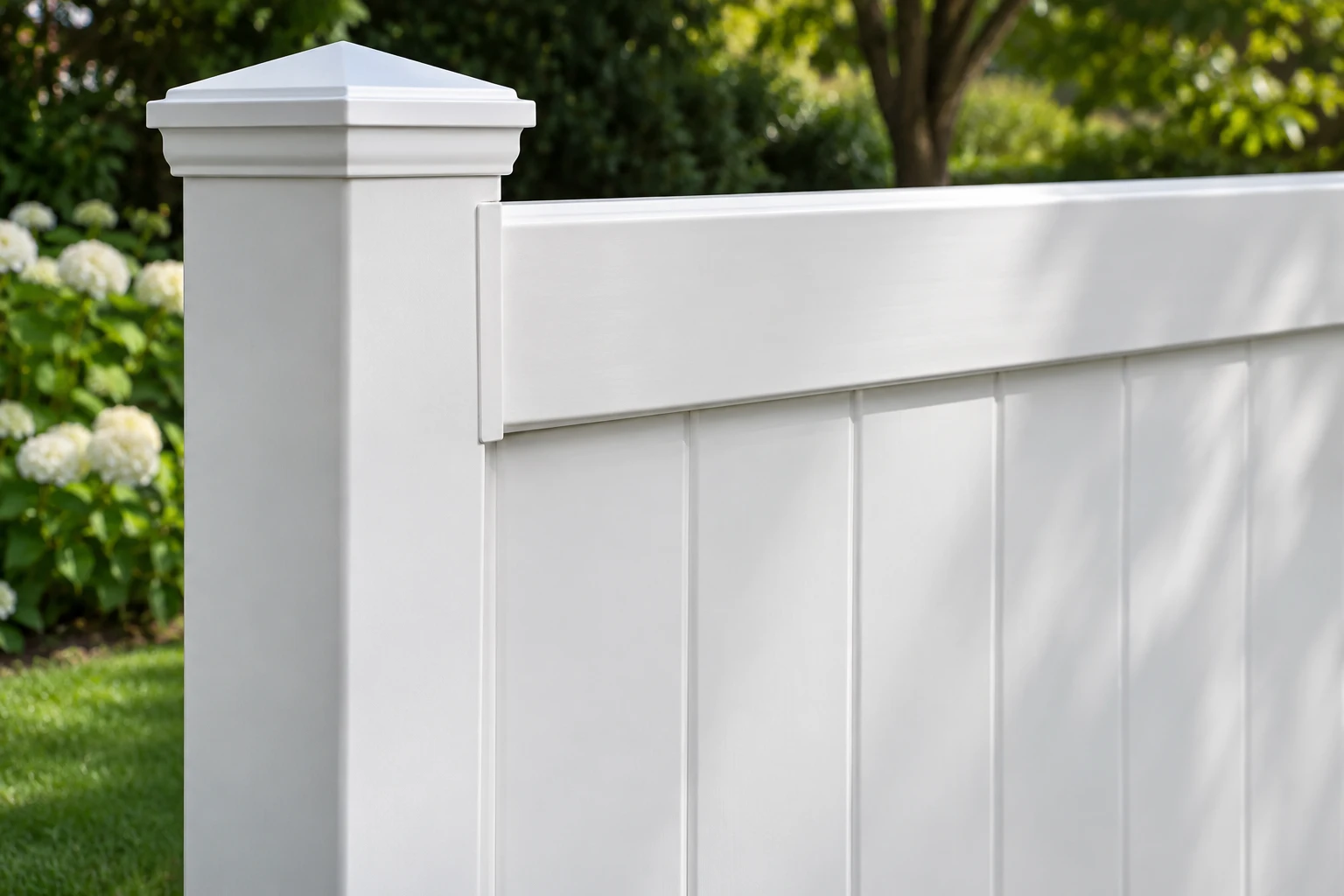
Vinyl fence quality depends mainly on the PVC formulation and UV-stabilizer package in the specific product, not on the word "vinyl" itself; ASTM F964-13(2024) is the industry standard covering dimensional tolerances, extrusion quality, impact resistance, and weatherability for this category.
Where does aluminum fit?
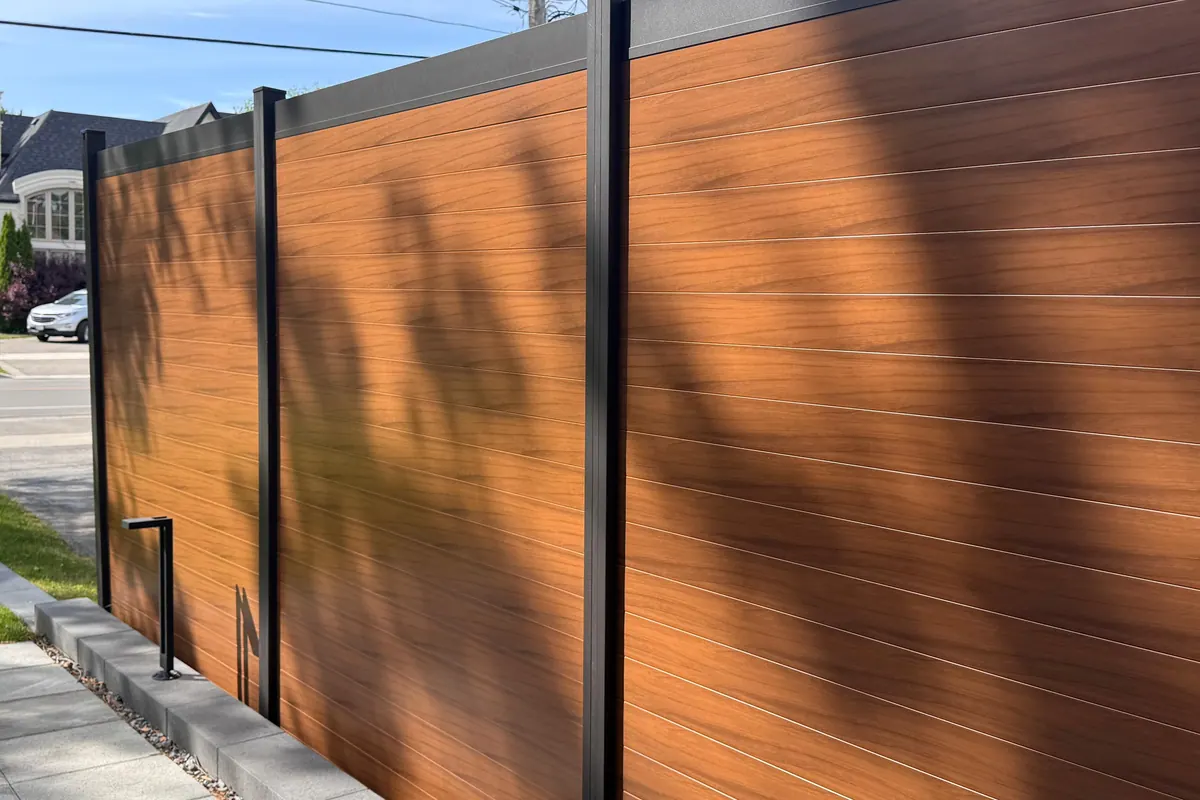
Aluminum privacy panels follow the same basic idea, a solid run with no sightline, in a metal substrate that doesn't go through PVC's UV-driven weathering process. Its paint or powder-coat finish is a separate factor, though, and like any exterior coating it can fade or show wear with age. PrimeAlux's aluminum privacy fencing is worth a look side by side with vinyl if long-term substrate stability in full sun is the deciding factor rather than price.
How do you decide between privacy and semi-privacy?
If the fence line faces a busy street, a neighbour's windows, or a pool area, privacy panels are usually the more straightforward call. If the fence is more about defining a boundary than blocking a view, or the yard needs some airflow (a side yard that gets hot and still in summer, for example), semi-privacy is worth considering instead. Our full material comparison guide walks through how both compare to composite and aluminum if you're still weighing materials.
Get a quote
Want pricing for your yard?
Pricing is by quote. Send your measurements and the style you like through the contact form, or call (437) 333-3032.
What's next?
Once you've settled on a style and rough height, get a quote with your yard dimensions so pricing can be worked out for your specific run.
Copy my details for sales
- Customer type
- City and province
- Material
- Fence length
- Fence height
- Anything else we should know
This sheet builds text in your browser. Nothing is sent or saved. Copy the text into your message or email to us.
Frequently Asked Questions
What's the difference between a privacy and semi-privacy vinyl fence?
A privacy fence uses solid panels with no gap to see through. A semi-privacy fence uses spaced panels that allow some airflow and partial visibility while still screening most of a direct sightline.
What height is a standard vinyl privacy fence?
It depends heavily on the city. Calgary and Edmonton generally allow up to 2.0 metres in side/rear yards; Toronto's enforcement records describe a 2.0 metre rear-yard maximum; Regina's current standard allows 2.14 metres (2.44 metres near an arterial street). Front yard limits are lower everywhere. Confirm the exact figure and measurement method with your specific city before ordering.
Does a vinyl privacy fence block sound as well as it blocks sightlines?
A solid panel does reduce some sound compared to an open fence, but PrimeAlux hasn't published sound-performance test data for its vinyl line, so no specific acoustic claim can be made here.
Can semi-privacy vinyl fencing be upgraded to full privacy later?
That depends on the specific installation. It's worth discussing with your installer at the quote stage if you think you may want to switch styles down the road.
Sources
- ASTM International, F964-13(2024): Standard Specification for Rigid PVC Exterior Profiles Used for Fencing and Railing. https://store.astm.org/standards/f964
Published .
This article is general planning information. Product specifications come from the PrimeAlux product pages and may change. Confirm dimensions, mounting and installation details with PrimeAlux before ordering, and check your local bylaws and permit requirements. This is not engineering or legal advice.