Vinyl Fence Panels: The Complete Buying Guide for Canada
Vinyl fence panels are a low-maintenance, PVC-based fencing option available in several styles, heights, and colours, and they're a common choice for homeowners who want a fence that doesn't need painting or staining. This guide covers the styles available, what actually separates a well-made PVC fence from a poorly made one, and what to check before you request a quote.
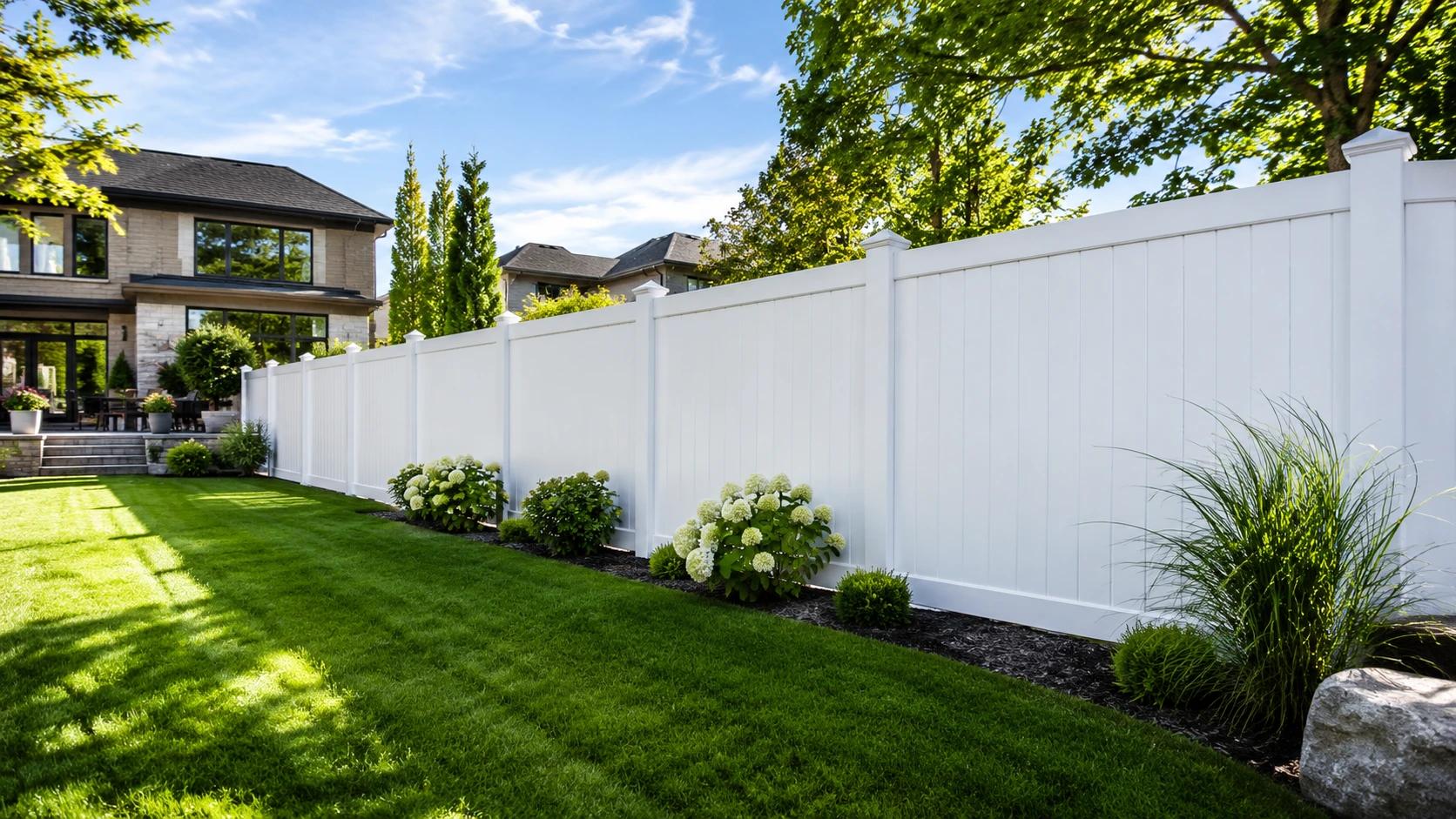
Key facts
- "Vinyl fencing" is the common name for fencing made from PVC (polyvinyl chloride).
- Vinyl fence panels don't require painting or staining, which is one of the main reasons homeowners choose the material over wood.
- ASTM F964-13(2024) is the industry standard that covers weatherability testing for this category.
Explore current styles and request pricing
PrimeAlux prices vinyl fencing by quote rather than listing fixed prices, so for available styles, colours, and current pricing, it's worth starting directly with PrimeAlux's vinyl fence panels rather than relying on this guide to restate them.
What are vinyl fence panels made of?
Vinyl fence panels are made from PVC, extruded into solid or hollow profiles and reinforced internally depending on the style. Unlike wood, there's no grain to split or finish to maintain season to season. PrimeAlux's vinyl fencing is Canadian-made, sourced from Canadian manufacturers.
What styles of vinyl fence panels are available?
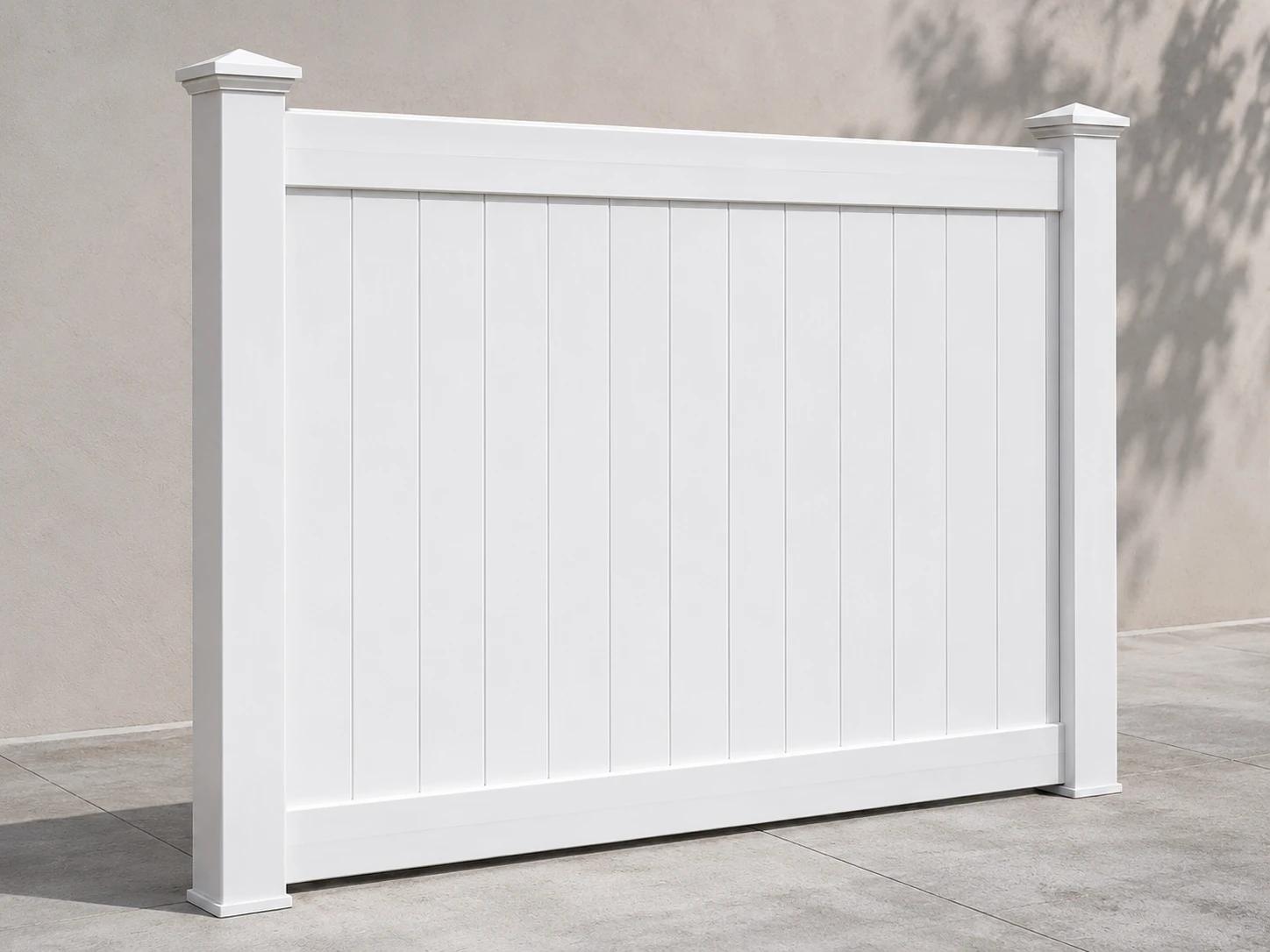
PrimeAlux's vinyl lineup covers the styles most Canadian properties need: privacy (solid panels, no sightline through), semi-privacy (spaced for partial airflow and a less enclosed look), picket (the classic open-style front yard fence), gates matched to the panel style, ranch rail for acreages and rural properties, and pool fence styling for pool enclosures.
Colours are available in white, brown, and grey woodgrain, which covers the clean-white, natural-wood-look, and modern-grey preferences most homeowners ask for.
Aluminum fencing from PrimeAlux
Planning for the long term? Choose aluminum.
- Aluminum does not rust or rot
- Limited warranty of up to 20 years
- Four standard colours
- Class A rated for fire and smoke - ASTM E84 (Privacy Slat | Flame Spread Index 0, Smoke Developed Index 50)
- 220 km/h wind rating (Privacy Plus | posts set underground, not base plate mounting)
- ASTM E90 | Acoustic Performance (Privacy Plus (6'W × 6'H) | STC 22 · OITC 19)
How long does vinyl fencing actually hold up?
Vinyl fencing is made from PVC (polyvinyl chloride), a rigid plastic. The standard most directly relevant to this product category is ASTM F964-13(2024), "Standard Specification for Rigid Poly (Vinyl Chloride) (PVC) Exterior Profiles Used for Fencing and Railing." It sets requirements for the material and physical properties of PVC fence profiles, including dimensional tolerances, extrusion quality, impact resistance, and weatherability testing on weathered specimens. It does not cover load-bearing performance such as wind load. In practice, this means PVC fence quality varies by formulation and UV-stabilizer package, not by the word "vinyl" on its own: a well-formulated profile holds its colour and flexibility far longer outdoors than a poorly stabilized one, and the standard exists precisely because the two aren't the same.
In practice, this means two things matter more than the fact that a fence is "vinyl": the quality of the UV-stabilizer package in the specific product, and the colour, since darker colours absorb more heat, which can accelerate weathering in some formulations. Many homeowners find white and lighter colours the more conservative long-term choice for this reason, though that's a preference, not a rule.
| Vinyl (PVC) | Wood | Aluminum | |
|---|---|---|---|
| Needs painting or staining | No | Yes, periodically | No |
| Can rust or rot | No | Rot risk | No |
| Finish can change with age | Formulation-dependent (chalking, colour fade) | Fades/greys; untreated or damaged wood can also deteriorate structurally from moisture and rot | Bare metal substrate doesn't UV-degrade; paint or powder-coat finish can fade or chip, and the metal can corrode if that coating is damaged |
| Typical styles | Privacy, semi-privacy, picket, gates, ranch rail, pool | Privacy, picket, lattice | Privacy, semi-privacy, screens, gates |
Get a quote
Ready to price your project?
Send the style, colour, length and height through the contact form, or call (437) 333-3032.
What should you check before buying vinyl fence panels?
Beyond style and colour, a few questions are worth asking any vinyl fence supplier before you order: What's the wall thickness of the profile, and is it tested to a recognized standard such as ASTM F964? How is the gate section reinforced, since gates see more stress than fixed panels? What's the post spacing and how are posts anchored for your soil and frost conditions? And what does the warranty actually cover, since terms vary by manufacturer and PrimeAlux's specific warranty details should be confirmed directly at the quote stage rather than assumed from general industry practice.
Where does aluminum fit?
If long-term dimensional stability is the main concern, aluminum is a genuinely different material category: the metal itself isn't a plastic and doesn't go through PVC's UV-driven weathering process. Its painted or powder-coated finish is a separate consideration, though, and that finish can fade or show wear over time the same way any exterior coating can. For a side-by-side of a solid-panel look in a different material, PrimeAlux's aluminum privacy fencing uses the same panelized approach as a vinyl privacy fence, in a material whose substrate doesn't rely on a UV-stabilizer package the way PVC does. It's a different price point and look, so it's worth comparing both before deciding.
How do you choose the right style and colour?
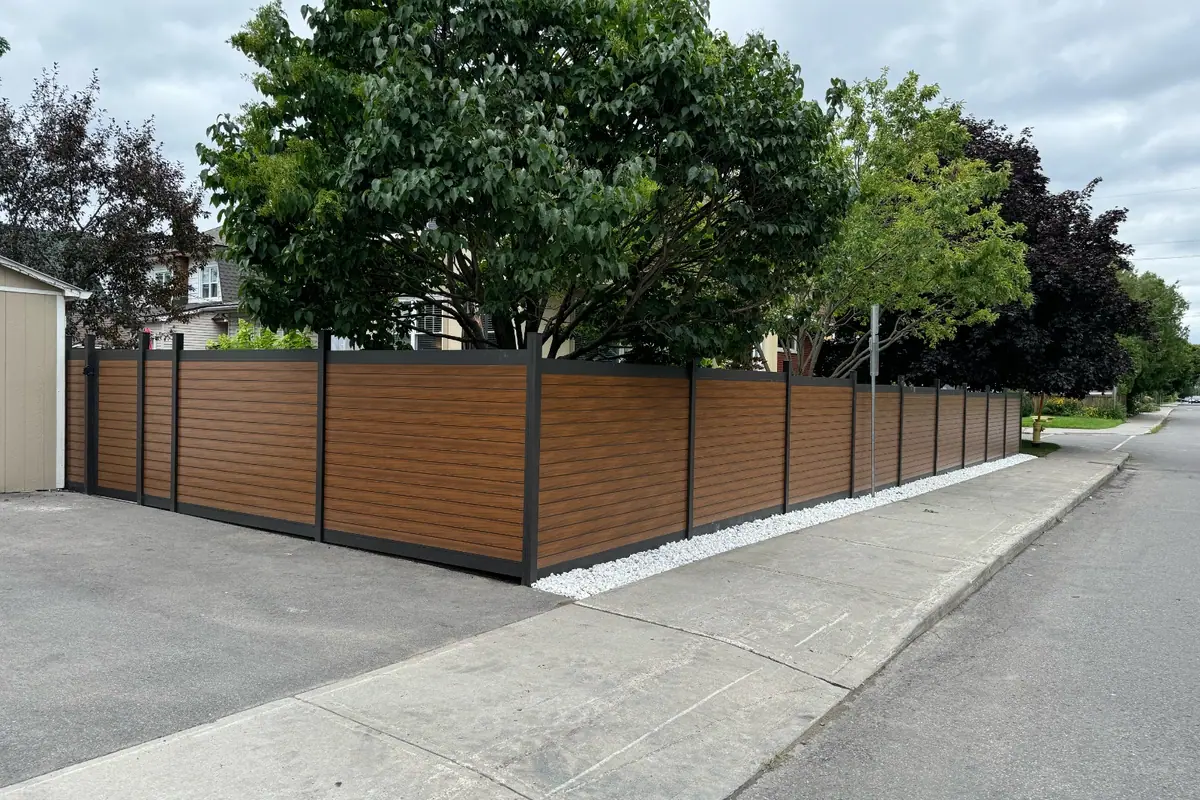
Start with function, not finish: privacy panels for full enclosure, semi-privacy where some airflow or sightline matters, picket for a front yard that doesn't need to block a view, ranch rail for acreage boundaries, and pool fence styling where local pool enclosure rules apply. If the fence will sit in full, unshaded southern or western exposure most of the day, a lighter colour is the more conservative long-term pick based on the weathering factors above.
For a broader look at how vinyl stacks up against composite and aluminum side by side, see our full material comparison guide.
How do you get started?
Vinyl fence pricing depends on style, height, and run length, so the next step is to get a quote with your property's dimensions and the style you're leaning toward. PrimeAlux serves customers Canada-wide, with tiered pricing available for contractors.
Copy my details for sales
- Customer type
- City and province
- Material
- Fence length
- Fence height
- Anything else we should know
This sheet builds text in your browser. Nothing is sent or saved. Copy the text into your message or email to us.
Frequently Asked Questions
Is vinyl fencing the same as PVC fencing?
Yes. "Vinyl fencing" is the common name for fencing made from PVC (polyvinyl chloride).
Does vinyl fencing need to be painted?
No. Vinyl fence panels don't require painting or staining, which is one of the main reasons homeowners choose the material over wood.
What colours are available for vinyl fence panels?
White, brown, and grey woodgrain.
What styles of vinyl fencing does PrimeAlux offer?
Privacy, semi-privacy, picket, gates, ranch rail, and pool fence styles.
Does vinyl fencing fade over time?
It can, and how much depends on the UV-stabilizer quality in the specific formulation and the colour chosen. Lower-grade stabilization and darker colours are more prone to visible fading and, eventually, chalking or brittleness. ASTM F964-13(2024) is the industry standard that covers weatherability testing for this category.
Sources
- ASTM International, F964-13(2024): Standard Specification for Rigid PVC Exterior Profiles Used for Fencing and Railing. https://store.astm.org/standards/f964
- The Madison Group, "PVC Part 3: Failure". https://madisongroup.com/pvc-part-3-failure/
Published .
This article is general planning information. Product specifications come from the PrimeAlux product pages and may change. Confirm dimensions, mounting and installation details with PrimeAlux before ordering, and check your local bylaws and permit requirements. This is not engineering or legal advice.