Vinyl Fence Height and Permit Rules in Toronto
This article is general information, not legal advice. Fence height, material, and pool enclosure rules are set by the City of Toronto under Municipal Code Chapter 447 and can change. Confirm current requirements with the City of Toronto before installing or modifying a fence, and do not assume a vinyl or PVC fence is an approved pool-enclosure material without checking directly.
Fences in Toronto are regulated under City of Toronto Municipal Code Chapter 447, which sets height, construction, and material requirements, including specific rules for fences that double as pool enclosures. This guide covers the general shape of the bylaw for an ordinary boundary fence, and a restriction that specifically matters for vinyl pool fencing in Toronto.
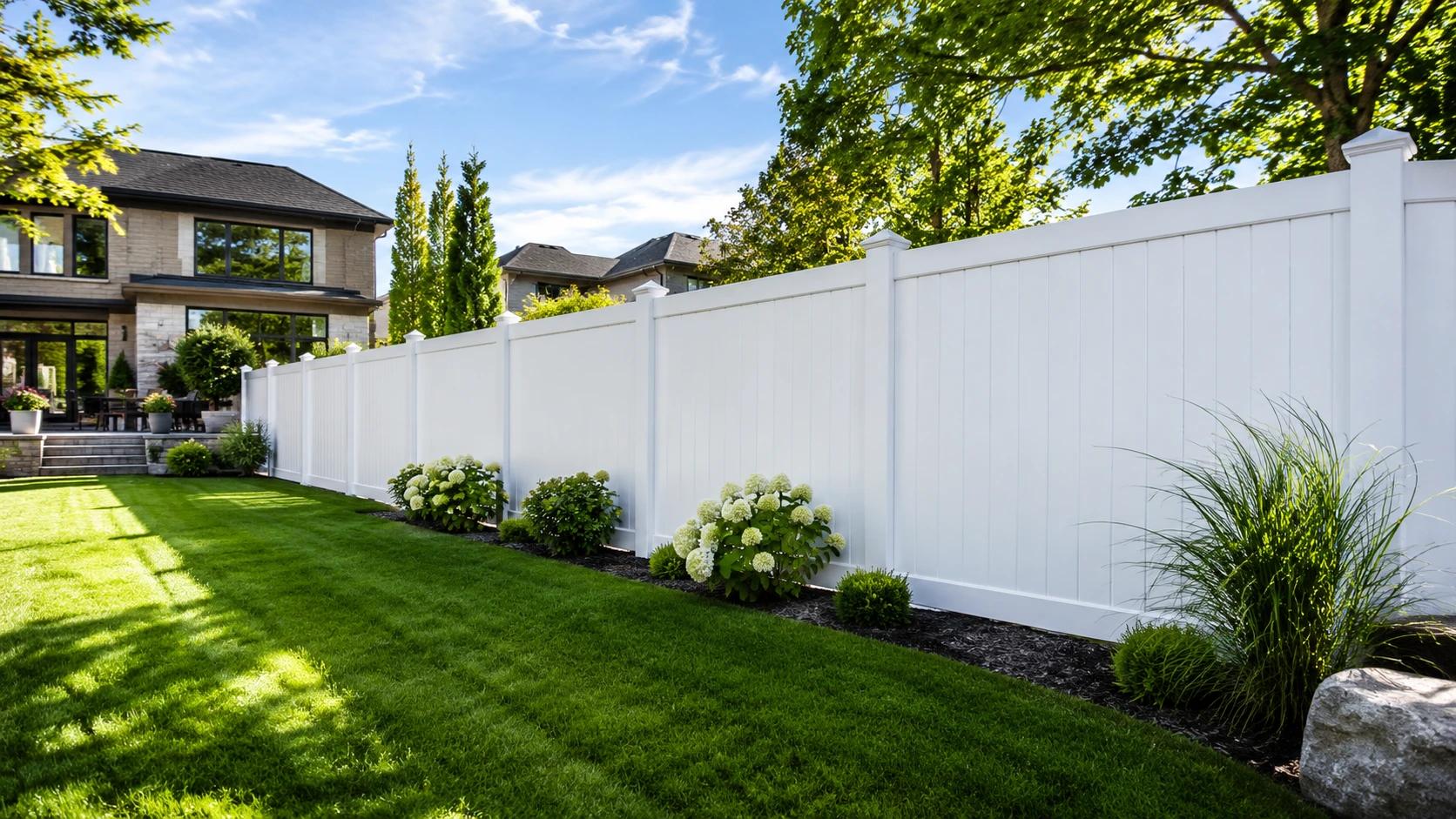
Key facts
- General fence construction within the bylaw's requirements doesn't require a separate fence permit.
- The City can issue a notice of violation, and the property owner can request an exemption from their local Community Council if they want to keep a non-compliant fence.
- A vinyl fence can still be used as an ordinary yard boundary that isn't part of the pool enclosure.
What does Toronto's Fence Bylaw say about height?
Chapter 447 of Toronto's Municipal Code, Section 1.2.B(1), sets a maximum allowable fence height of 1.2 metres for the portion of a fence in a front yard that sits within 2.4 metres of the front lot line. Elsewhere on the property, including the rest of a front yard setback, side yards, and rear yards, the general maximum is 2.0 metres, as described in enforcement records and fence-exemption background files citing the same section. Height itself is measured by taking the average grade level, measured perpendicular to and one metre away on either side of the fence, which matters on a sloped lot: the City's enforcement records show fences measuring differently from each side being averaged together rather than measured from whichever side happens to read lower. A fence near a driveway within 2.4 metres of a lot line abutting a public street also has to meet the bylaw's open-fence-construction requirements (such as open mesh chain-link or equivalent), on top of the height limit. Corner-lot specifics and the rules for hedges, shrubs, and other vegetation acting as a fence should be confirmed directly with the City, since those vary further by location.
Get a quote
Planning a fence project?
Tell us the length, the height and the number of gates through the contact form, or call (437) 333-3032.
What if the fence doesn't meet the bylaw?
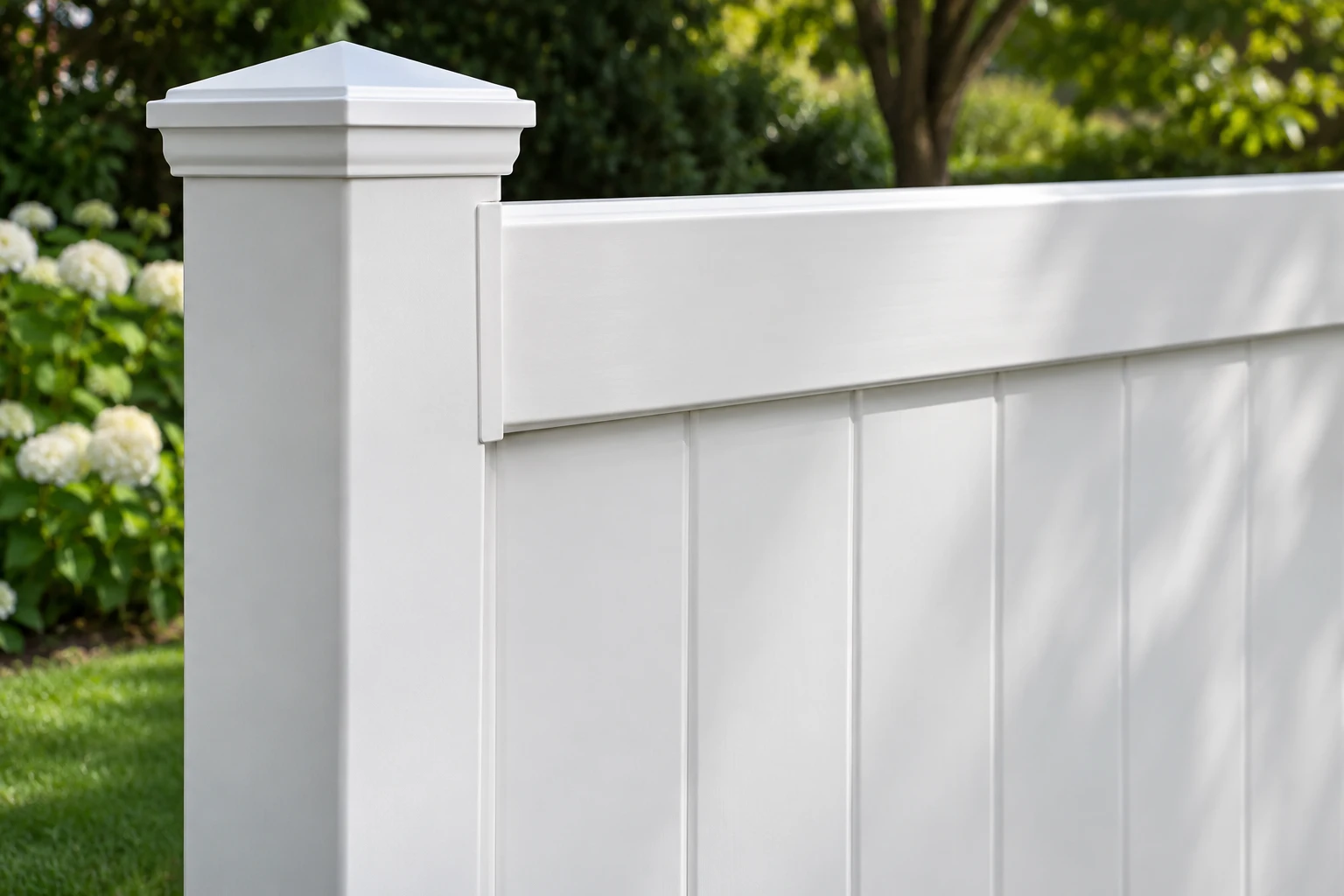
Property owners whose fence doesn't comply can request an exemption from their local Community Council. Complaints about non-compliant fences can also be filed with the City through 311 or an online service request, and Municipal Licensing and Standards staff can inspect and issue a notice of violation if a fence exceeds the allowed height or uses a non-permitted construction. One timing detail worth knowing, current as of this writing: due to the 2026 municipal election cycle, Community Council meetings are suspended from August through December 2026, so fence exemption applications are still being accepted, reviewed, and inspected during that window, but final decisions won't be made until Community Council meetings resume in early 2027. This is a temporary condition tied to the 2026 election cycle, not a permanent feature of the exemption process, so confirm the current status with the City if you're reading this after early 2027. For a non-compliant pool enclosure specifically, the City's guidance is that the pool can't be used until a compliant enclosure is installed or an exemption is granted, regardless of this timing.
Why does a pool enclosure need extra care, specifically for vinyl?
An ordinary boundary fence and a pool enclosure are two different things under Chapter 447, even when the same physical fence does both jobs. A fence that doubles as a swimming pool enclosure has to comply with both the general Fence Bylaw height/placement rules above and Chapter 447's separate, specific pool-enclosure construction standards, and those standards list permitted materials: City reports describe wood, chain-link, metal picket, glass panel systems, and masonry as permitted, with vinyl (PVC) not among them. This isn't a hypothetical concern: multiple Toronto fence-exemption case files document existing vinyl/PVC pool fences found non-compliant with Chapter 447's construction standards for exactly this reason, requiring the homeowner to apply for a site-specific exemption to keep the fence in place. In practice, this means a vinyl fence used as an ordinary yard boundary in Toronto is a different situation from a vinyl fence used to form a required pool enclosure: the first follows the general height rules above, the second runs into a permitted-materials restriction that needs to be checked and, if needed, worked around with an exemption application or a permitted material instead.
Aluminum fencing from PrimeAlux
Planning for the long term? Choose aluminum.
- Aluminum does not rust or rot
- Limited warranty of up to 20 years
- Four standard colours
- Class A rated for fire and smoke - ASTM E84 (Privacy Slat | Flame Spread Index 0, Smoke Developed Index 50)
- 220 km/h wind rating (Privacy Plus | posts set underground, not base plate mounting)
- ASTM E90 | Acoustic Performance (Privacy Plus (6'W × 6'H) | STC 22 · OITC 19)
Does the material (vinyl vs. wood vs. metal) change the general height rule?
For an ordinary boundary fence that isn't part of a pool enclosure, no: Chapter 447's height and structure requirements apply regardless of fence material, so a vinyl fence is measured against the same height limits as a wood or metal one in the same location on the property. The pool-enclosure material restriction above is the specific exception to keep in mind.
Explore current styles and request pricing
PrimeAlux prices vinyl fencing by quote rather than listing fixed prices, so for an ordinary boundary fence within the height rules above, the fastest way to see current styles and request pricing for your project is directly through PrimeAlux's vinyl fencing in Toronto.
Where does aluminum fit?
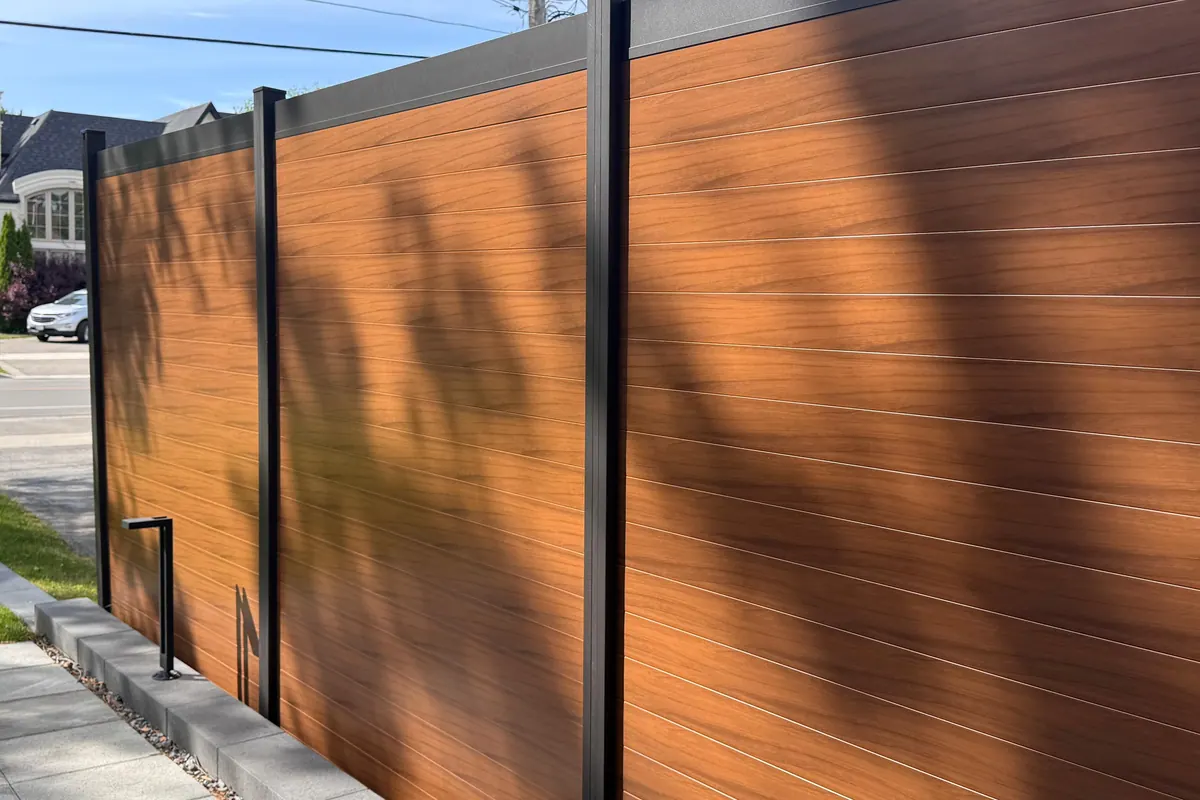
For a general boundary fence, the choice between vinyl and aluminum in Toronto comes down to appearance and upkeep rather than code compliance. For a pool enclosure specifically, Toronto's Chapter 447 lists "metal picket" as a permitted construction, and that's a narrower category than PrimeAlux's solid aluminum privacy panels: "metal picket" generally describes an open, vertically-barred style, not a solid panel. Having aluminum as the substrate doesn't automatically put a solid aluminum privacy or semi-privacy panel into the permitted "metal picket" category, so if an aluminum pool enclosure is the goal, it's worth confirming with the City or PrimeAlux whether a specific aluminum product's construction actually qualifies as metal picket under Chapter 447, rather than assuming any aluminum fence does. aluminum fencing in Ontario covers PrimeAlux's aluminum options available in Ontario if you're comparing materials, particularly for a pool-adjacent section.
What's next?
Confirm your property's exact height limit, and, if a pool enclosure is involved, the permitted materials and exemption process, with the City of Toronto before finalizing a design. Then get a quote for the parts of the project where vinyl applies. Our full material comparison guide is also worth reviewing if you're still deciding on a material.
Copy my details for sales
- Customer type
- City and province
- Material
- Fence length
- Fence height
- Anything else we should know
This sheet builds text in your browser. Nothing is sent or saved. Copy the text into your message or email to us.
Frequently Asked Questions
What is the maximum fence height in a Toronto front yard?
1.2 metres for the portion of the fence within 2.4 metres of the front lot line, under Chapter 447 Section 1.2.B(1). Beyond that 2.4 metre zone, the general 2.0 metre limit applies.
What is the maximum fence height in a Toronto rear or side yard?
2.0 metres, per Chapter 447 Section 1.2.B(1).
Can a vinyl fence be used as a pool enclosure in Toronto?
Not as a matter of course. City reports describe Chapter 447's permitted pool-enclosure materials as wood, chain-link, metal picket, glass panel systems, and masonry; vinyl (PVC) is not listed, and documented fence-exemption cases show vinyl/PVC pool fences found non-compliant without a granted exemption. A vinyl fence can still be used as an ordinary yard boundary that isn't part of the pool enclosure.
Does a solid aluminum fence automatically count as Chapter 447's permitted "metal picket" pool-enclosure material?
Not automatically. "Metal picket" generally refers to an open, vertically-barred style, which is narrower than a solid aluminum privacy or semi-privacy panel. Confirm whether a specific aluminum product's construction actually qualifies before assuming it does.
Do I need a permit to install a vinyl fence in Toronto?
General fence construction within the bylaw's requirements doesn't require a separate fence permit. A pool enclosure, regardless of material, requires compliance with Chapter 447's pool-enclosure construction standards and may require a permit application and inspection.
What happens if my fence doesn't meet Chapter 447?
The City can issue a notice of violation, and the property owner can request an exemption from their local Community Council if they want to keep a non-compliant fence.
Sources
- City of Toronto, Fence Exemption Request background file: 23 Hampshire Heights (vinyl/PVC pool fence found non-compliant with Chapter 447). https://www.toronto.ca/legdocs/mmis/2026/ey/bgrd/backgroundfile-284156.pdf
- City of Toronto, Fence Exemption Request background file: 83 Westhead Road (vinyl/PVC and composite pool fence materials not permitted under Chapter 447). https://www.toronto.ca/legdocs/mmis/2026/ey/bgrd/backgroundfile-287065.pdf
- City of Toronto, "Fences" (Municipal Code Chapter 447 overview). https://www.toronto.ca/fences
- City of Toronto, "Fence Exemption" (Community Council meeting suspension, 2026 municipal election). https://www.toronto.ca/services-payments/permits-licenses-bylaws/fence-exemption
- City of Toronto, "Fences" (height measured by average grade, one metre either side of the fence). https://www.toronto.ca/services-payments/building-construction/fences/
Published .
This article is general planning information. Product specifications come from the PrimeAlux product pages and may change. Confirm dimensions, mounting and installation details with PrimeAlux before ordering, and check your local bylaws and permit requirements. This is not engineering or legal advice.