Privacy Screen Outdoor: Permanent vs Temporary Solutions Compared
Outdoor privacy screens range from $30 fabric panels that last one season to permanent aluminum systems that hold up for 25 or more years in Canadian weather. Temporary options (fabric, bamboo, reed) degrade quickly in freeze-thaw cycles and UV exposure. Permanent aluminum privacy panels install like fencing, need only an occasional rinse to stay clean, and can be matched to any backyard or deck aesthetic. This guide covers every option side by side so you can choose what actually fits your situation.
If you’ve searched for a privacy screen outdoor solution in Canada, you’ve probably noticed just how many options exist. Fabric panels on a frame. Bamboo rolls tied to existing railings. Plastic lattice. Wood screens. Aluminum panels. Artificial hedge tiles. Every product promises privacy and style. Most deliver one for a season, then start to fade, warp, or fall apart.
The real question isn’t which option looks best at the hardware store. It’s which one will still look good in three years, when a Canadian winter has gone through it at least twice. This guide breaks down every major category of outdoor privacy screen solution, what each one actually costs over time, and why the material choice matters far more than most buyers expect.
What Is an Outdoor Privacy Screen, Really?
An outdoor privacy screen is any barrier installed in a yard, deck, patio, or balcony to block sightlines from neighbours, the street, or adjacent properties. The definition is broad on purpose, because the category includes everything from a $30 bamboo roll zip-tied to a balcony railing to a full aluminum privacy fence system.
Most homeowners shopping for privacy screens are trying to solve one of three problems. They want to block the view from a neighbour’s window or second-story deck. They want to screen off a pool, hot tub, or patio from street view. Or they want to create a visual separation between their backyard and an adjacent property without the expense of a full fence. The right solution depends heavily on how permanent you want the result to be and what kind of maintenance you’re willing to take on.
In Canada, the durability question is central. Temperature swings of 50 degrees Celsius between summer and winter put enormous stress on any outdoor material. UV exposure, moisture cycling, and freeze-thaw pressure all accelerate the degradation of fabric, wood, bamboo, and low-grade plastics. What looks fine at install can look weathered and tired within two or three seasons.
Temporary Privacy Screen Options: What to Expect
Temporary outdoor privacy screens are popular because they’re inexpensive and quick to set up. They work as a short-term solution. The consistent problem is that “short-term” often means shorter than buyers expect.
Fabric privacy screens are typically polyethylene or polyester mesh panels designed to be zip-tied to existing fencing, railings, or a temporary metal frame. They’re windscreen-style, partially see-through, and range from $30 to $150 for a standard panel. In practice, they fade significantly after one UV season. Most buckle or tear within two winters due to ice load and freezing expansion around the attachment points. They provide partial screening at best.
Bamboo and reed rolls look natural and are genuinely affordable. A 6-foot by 15-foot bamboo roll typically runs $40 to $80. The problem in Canada is moisture. Bamboo absorbs water, and in climates that see repeated freeze-thaw cycles, it splits and cracks. Most bamboo privacy screens need full replacement within two to three years. They also tend to attract mould and mildew in humid summers.
Artificial hedge tiles and ivy panels are plastic grid tiles with synthetic foliage attached. They look good in a showroom. Outdoors in Canada, UV breaks down the plastic within a few seasons, the faux foliage becomes brittle, and the tiles fade from green to a bleached, chalky colour. Some higher-end versions with UV inhibitors hold up better, but they still age visibly and provide minimal structural privacy.
Freestanding outdoor screens with wood or vinyl frames are popular on patios. A folding screen with wood lattice panels or slatted boards can look attractive when new. Wood outdoor screens require the same maintenance as any exterior wood product: staining or sealing every two to three years, with a realistic lifespan of six to eight years before they warp, crack, or lose structural integrity. Vinyl frame screens hold up better than wood but can become brittle and crack in temperatures below -20°C, which most of Canada sees regularly.
Permanent Outdoor Privacy Screen Options
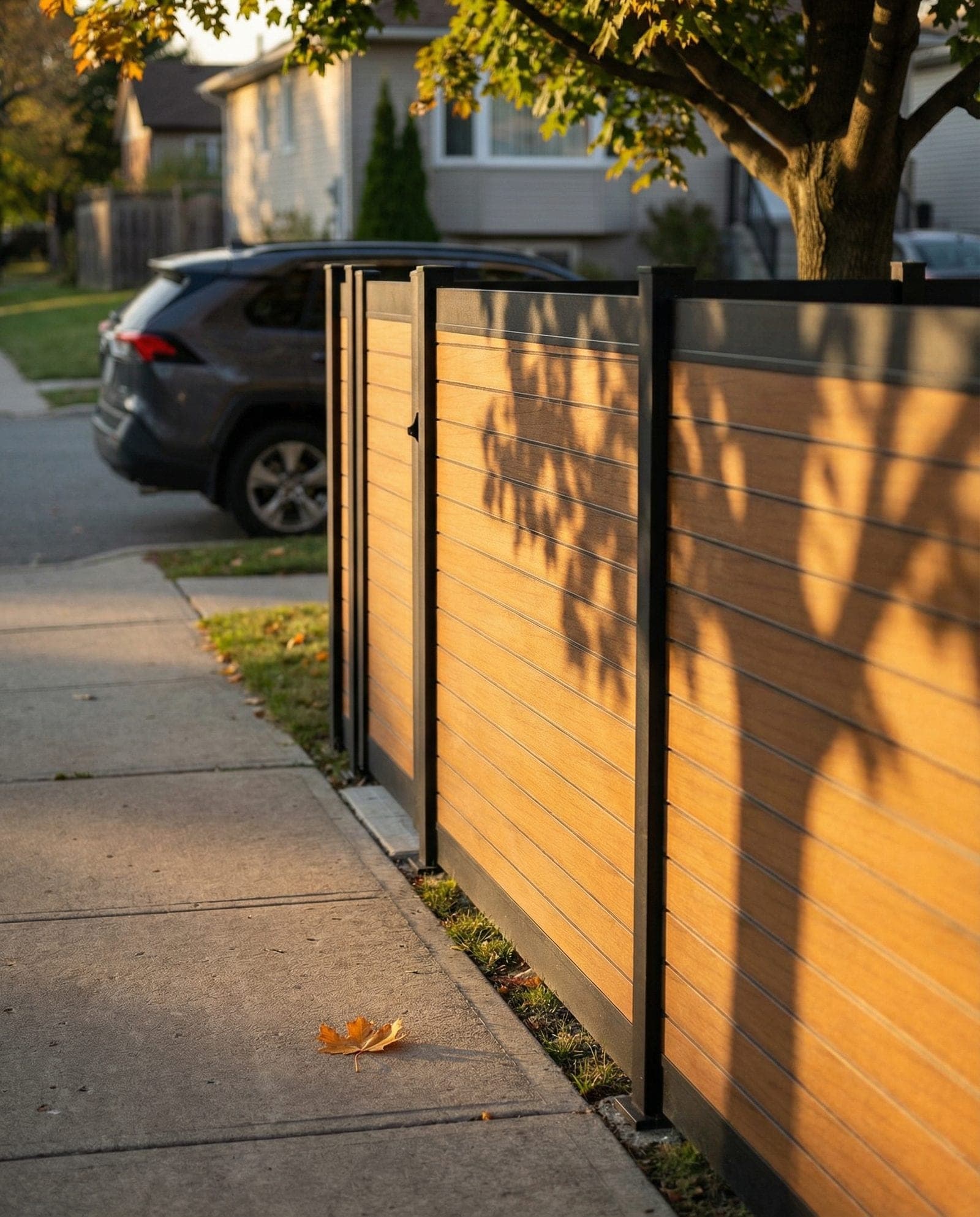
Permanent outdoor privacy screens are engineered to stay in place, and need only an occasional rinse to stay clean. The upfront cost is higher. The per-year cost over a full lifespan is significantly lower.
Cedar and pressure-treated wood privacy screens are built to last structurally for eight to twelve years, but they start to look worn much sooner. Grey, cracked, and warped wood is a common sight on Canadian properties within two to three seasons, particularly when the owner skips staining. Even when properly maintained, wood screens age visibly and require ongoing attention.
Aluminum privacy panels are an outdoor privacy screen material that needs only an occasional rinse to stay clean. Aluminum privacy fence panels from PrimeAlux use a three-layer wood-grain coating process that resists UV fading, moisture, and temperature cycling. The fire test report names the PrimeAlux Privacy Slat fence system, which was tested under ASTM E84 (Flame Spread Index 0, Smoke Developed Index 50 for that specimen only), and the 220 km/h wind rating applies to Privacy Plus with posts set underground, not base plate mounting. They install on posts set 3 feet underground, the same as a permanent fence.
The Privacy Plus line adds foam-core panel construction that improves both rigidity and thermal performance, making it particularly effective on outdoor living spaces where you want to block both sightlines and wind. The semi-privacy aluminum fence is worth considering for areas where full enclosure would feel too closed in. The spaced slat design maintains airflow and partial sightlines while blocking direct viewing angles.
Permanent vs Temporary: Side-by-Side Comparison
The table below compares the major outdoor privacy screen categories on the factors that matter most for Canadian homeowners.
| Option | Upfront Cost | Lifespan in Canada | Maintenance | Privacy Level |
|---|---|---|---|---|
| Fabric/mesh screen | $30–$150 | 1–2 seasons | Replace annually | Partial |
| Bamboo/reed roll | $40–$80 | 2–3 years | Replace regularly | Moderate |
| Artificial hedge tiles | $80–$200 | 3–5 years | Low (fades badly) | Full (partial gaps) |
| Cedar/wood screen | $300–$800+ | 6–10 years | Stain every 2–3 yrs | Full |
| Vinyl panel screen | $200–$600 | ~10 years | Low (cracks in cold) | Full |
| Aluminum privacy panel (PrimeAlux) | $80–$120/linear ft installed | 25+ years | Occasional rinse | Full |
Where Outdoor Privacy Screens Work Best
Not all outdoor privacy screen applications are the same. The best solution depends on where you’re installing it.
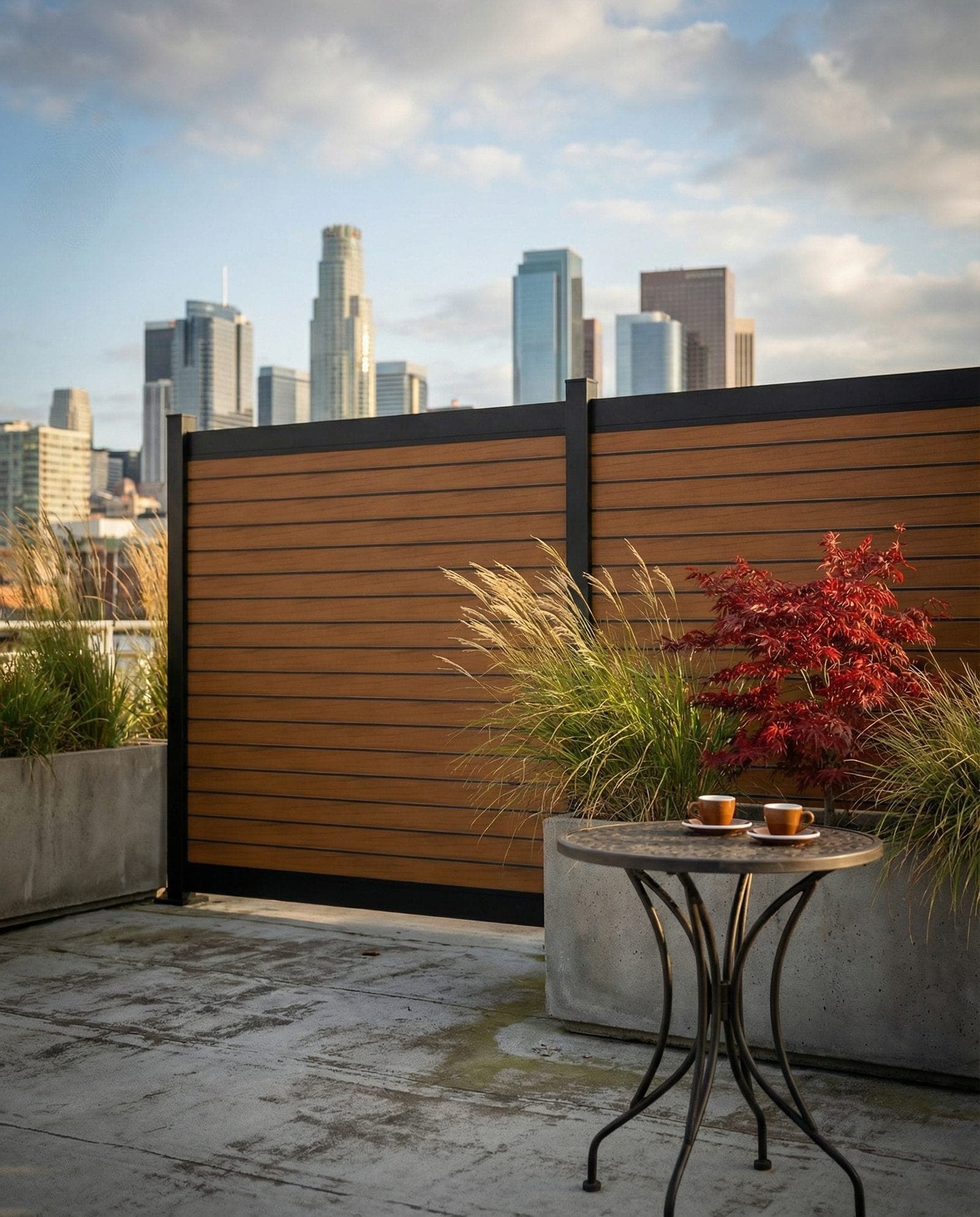
Deck and patio privacy is one of the most common use cases. Homeowners want to screen off a side of the deck that faces a neighbour’s yard or a street. Permanent aluminum privacy panels work particularly well here because they can be anchored into concrete footings adjacent to the deck structure, creating a permanent partition that matches the fence line if one exists. The Privacy Plus foam-core panel is especially effective in this application because it blocks wind as well as sightlines, making the outdoor space significantly more comfortable.
Pool enclosures often require a privacy screen component for both aesthetics and safety. Check your provincial pool safety requirements (refer to Health Canada pool safety guidelines). Aluminum panels provide the full privacy needed around a pool area without creating the ongoing maintenance burden of wood or the brittleness risk of vinyl in winter.
Backyard boundaries where you want full privacy from a neighbour’s yard benefit most from a continuous aluminum privacy panel run along the property line. This creates a clean, permanent border that looks consistent from both sides and doesn’t require the seasonal removal or replacement that fabric or bamboo screens do.
Balcony privacy on attached townhomes and semi-detached properties is trickier because permanent anchoring may require strata or municipal approval. In these cases, a freestanding aluminum frame system or wall-mounted panel can provide the permanent look and feel without requiring in-ground footings. Contact PrimeAlux to discuss balcony-specific configurations.
What to Watch for When Buying a Privacy Screen Outdoor
The outdoor privacy screen market has a fair number of misleading claims, particularly in the temporary product segment. A few things to check before buying:
UV resistance ratings on fabric and plastic products are often stated without test data. A product described as “UV resistant” may still fade significantly within one Canadian summer. Ask for the specific UV degradation test results, not just the marketing description.
Wind load claims without certification are common. Fabric screens in particular are marketed with wind resistance numbers that come from lab tests under ideal conditions, not real Canadian winter wind loading with ice accumulation. The 220 km/h wind rating applies to Privacy Plus with posts set underground, not base plate mounting. Most fabric screens have no verified structural testing.
Installation depth matters for anything going into the ground. Temporary post systems often use shallow ground stakes or surface anchors that pull out in high wind or frost heave. Permanent aluminum fence posts set 3 feet underground at proper frost depth are stable year-round.
Warranty language on privacy screen products varies widely, so read it before you buy. The PrimeAlux limited warranty lists 20 years for aluminum metal, 15 years for coated aluminum fence and 10 years for powder coated aluminum extrusion profile, and requires the fence system to be cleaned twice per year following PrimeAlux cleaning instructions.
Privacy Screen Outdoor: Material Performance in Canadian Winters
Canadian winters test outdoor materials in ways that other climates don’t. A material that performs fine in southern US conditions may degrade quickly here. Here’s how the main privacy screen materials hold up through a full Canadian winter cycle:
| Material | Freeze-Thaw Performance | Snow/Ice Load | UV Winter Sun |
|---|---|---|---|
| Fabric/mesh | Tears at attachment points | Collapses or tears | Fades rapidly |
| Bamboo/reed | Splits and cracks | Poor (absorbs moisture) | Bleaches, loses colour |
| Cedar/wood | Warps over time | Moderate (needs sealing) | Greys without staining |
| Vinyl/PVC | Brittle below -20°C | Moderate (may crack) | Yellows over time |
| Aluminum (PrimeAlux) | Not affected | 220 km/h rating (Privacy Plus, posts set underground) | Three-layer coating holds colour |
How PrimeAlux Privacy Panels Compare as an Outdoor Privacy Screen
PrimeAlux manufactures aluminum fence and privacy panel systems designed specifically for permanent outdoor installation in North American climates. The product line includes three panel types that serve different privacy screen applications:
The Privacy Fence Panel uses solid aluminum slats with no gaps, creating a complete sightline block. It’s the right choice for pool enclosures, full backyard screening, or anywhere you want maximum privacy. Sections are 6 ft wide. Ask our sales team about custom sizing.
The Privacy Plus Panel adds a foam-core construction layer that improves panel rigidity, reduces sound transmission, and provides better thermal insulation at the boundary line. For a patio or deck privacy screen application, this is the premium choice.
The Semi-Privacy Panel uses spaced aluminum slats that block direct sightlines while maintaining airflow and partial light transmission. It works well as a front yard or side yard privacy screen where complete enclosure would feel too closed off.
The fire test report names the PrimeAlux Privacy Slat fence system, which recorded a Flame Spread Index of 0 and a Smoke Developed Index of 50 under ASTM E84 for that specimen only. All panels use up to 70% recycled aluminum content (see The Aluminum Association on sustainability), and come in five wood-grain finishes: Natural Walnut, Grey Walnut, Walnut, Dark Walnut, and Grey Brown. Installed pricing runs $80 to $120 per linear foot for residential installations. Contact PrimeAlux for a project-specific quote.
For more information on how PrimeAlux aluminum panels compare specifically to other materials, see the guides on aluminum fence pricing in Canada and outdoor privacy panels for Canadian homes.
Frequently Asked Questions
What is the best outdoor privacy screen for a Canadian deck?
Permanent aluminum privacy panels are the best option for Canadian decks. They withstand freeze-thaw cycles, need only an occasional rinse to stay clean, and install against a deck structure or along the deck perimeter using in-ground posts. The Privacy Plus line from PrimeAlux is particularly suited to deck applications because the foam-core construction also blocks wind, making the deck usable longer into the season.
How long do fabric outdoor privacy screens last?
Fabric mesh privacy screens typically last one to two seasons in Canadian climates. UV exposure degrades the material and fading becomes visible by the second summer. Freeze-thaw cycling causes stress at attachment points and the fabric itself can tear or lose tension over winter. Most homeowners replace fabric screens annually.
Can I attach a permanent privacy screen to an existing fence?
It depends on the existing fence’s structural condition. Aluminum panel extensions can be installed above an existing fence line using post extensions, but the existing posts need to be sound enough to handle the added load. A fence contractor can assess whether your current posts can support an extension or whether new posts alongside the existing fence are the better approach.
How much does a permanent outdoor privacy screen cost in Canada?
Permanent aluminum privacy panels from PrimeAlux run approximately $80 to $120 per linear foot installed for a standard residential installation. The total cost depends on the length of the run, panel height, and whether any gates are included. Cedar or pressure-treated wood screens are typically lower upfront ($40 to $80 per linear foot installed) but require ongoing staining and replacement costs that add up significantly over time.
Do outdoor privacy screens require permits in Canada?
Permit requirements for outdoor privacy screens vary by municipality and depend on the height of the installation. In most Canadian cities, fence and privacy screen structures over 1.8 metres (approximately 6 feet) require a building permit. Installations within setback distances from property lines or adjacent to pool areas may also require permit approval. Check with your local municipality before installing any permanent structure. The National Building Code of Canada also sets baseline structural requirements for outdoor structures.
What is the most low-maintenance outdoor privacy screen?
Aluminum privacy panels require the least maintenance of any permanent outdoor privacy screen option. Slats need only an occasional rinse to stay clean, and they do not need painting, staining, or sealing. Wood and vinyl screens require regular treatment to maintain appearance and structural integrity. Fabric and bamboo products need replacement on a regular cycle regardless of maintenance effort.
Do aluminum privacy screens work in all seasons in Canada?
Yes. Aluminum privacy panels are specifically designed for climates with extreme temperature variation. The three-layer coating resists UV and moisture, the structural aluminum is unaffected by freeze-thaw cycles, and the installation depth of 3 feet underground puts the posts below the frost line in most Canadian regions. The 220 km/h wind rating applies to Privacy Plus with posts set underground, not base plate mounting.
Can a privacy screen increase home value?
Permanent privacy improvements that use durable, attractive materials tend to contribute to curb appeal and outdoor livability, which buyers consider when evaluating a property. A clean, permanent aluminum privacy screen that defines the backyard space is generally viewed positively. Deteriorating temporary screens or aging wood structures can have the opposite effect.
The Right Privacy Screen Outdoor Starts With the Right Material
The outdoor privacy screen category includes a wide range of options, but the fundamentals come down to one question: how long do you want the solution to last? If you need something for a single season or a rental property, fabric or bamboo screens are a reasonable low-cost option. If you want a permanent privacy screen, aluminum is the only realistic answer for Canadian conditions.
PrimeAlux aluminum privacy panels install as a permanent architectural element, not as a temporary fix. They come in wood-grain finishes that look natural without the staining and sealing that wood demands. View the Privacy Fence Panel line or explore Privacy Plus panels to find the right system for your outdoor space. For a quote specific to your project, contact PrimeAlux directly.