Patio Privacy Screen: Blocking Sightlines and Noise Without Losing Space
What's the best way to screen a patio for privacy?
A patio sits at grade, unlike a balcony, and usually only needs screening along one or two open sides rather than a full perimeter. That makes it a smaller job than a yard fence, but the sightline and noise problems it solves are often more immediate, patios tend to sit closer to a neighbour's window, a shared fence line, or a street than the middle of a backyard does.
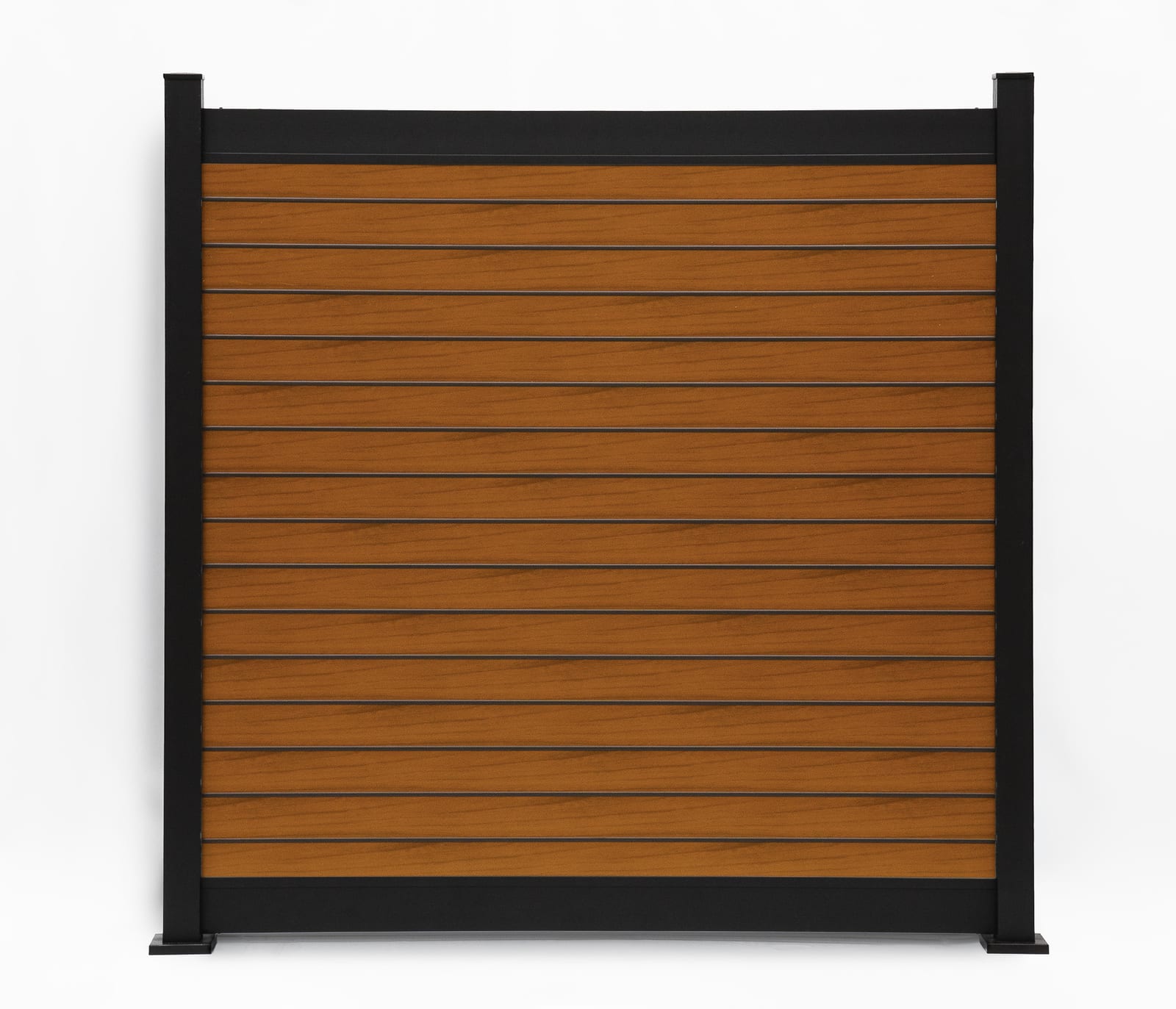
TL;DR
- Ground-set aluminum panel: anchors on a concrete base (≈15 cm recommended depth), no full in-ground fence posts required
- Privacy Plus configuration: independently lab-tested at STC 22 / OITC 19 for sound transmission loss, the only configuration with real acoustic test data behind it
- Semi-Privacy trades some sightline block for airflow, useful where a fully solid panel would trap heat against a patio in summer
- Panels are wind-load tested to 220 km/h as part of the same aluminum system used across the fence and screen lineup
- For balcony-specific mounting (freestanding, wall, or railing), see our balcony privacy screen guide instead, the anchoring is different
Ground-set vs. attached to an existing structure
Most patio privacy screens fall into one of two setups:
- Ground-set panels: installed on their own posts along the open side of the patio, anchored with a small concrete base. This is the more common setup for a patio that isn't already enclosed by a deck railing or house wall on that side.
- Structure-attached panels: mounted to an existing deck railing, pergola post, or wall where one already runs along the patio's edge. This can mean less new footing work, but the attachment point needs to actually be rated to carry the panel's weight and wind load, not just be convenient.
Either way, the panel system itself is the same slide-lock aluminum construction used across PrimeAlux's fence and screen lines, 80 × 80 mm posts with reinforced top and bottom rails.
Blocking sound, not just sightlines
A patio is often the closest a household gets to a neighbour's yard or a street, so sound matters here in a way it doesn't for a fence running along the back of a large lot. This is the one place where PrimeAlux has actual third-party acoustic test data, not just a general durability claim:
| Test | Specimen | Result |
|---|---|---|
| ASTM E90 (Intertek, Building & Construction, York, PA) | PrimeAlux Horizontal Privacy Plus, 6' W × 6' H | STC 22, OITC 19 |
STC (Sound Transmission Class) and OITC (Outdoor-Indoor Transmission Class) are standard single-number ratings used to compare how much airborne sound an assembly reduces. These numbers describe the specific 6' by 6' Horizontal Privacy Plus specimen Intertek tested, not a guarantee for every installation, outdoor sound behaviour depends on the site's actual layout and sound paths, not the panel alone. It's still real, independently measured data, which is more than fabric, lattice, or unrated screening options can offer.
The Semi-Privacy configuration trades some of that sound and sightline blocking for airflow, worth considering on a patio that gets hot and still in summer without a breeze moving through it.
Sizing a patio screen
Panels run 2.6 ft wide by 6 ft high as a standard unit, with custom sizing available. Most patios only need screening along the open side or sides facing a neighbour or the street, not a full enclosure, so measure the specific sightline you're trying to block rather than defaulting to screening the whole perimeter.
Frequently Asked Questions
Does a patio privacy screen actually reduce noise?
The Privacy Plus configuration has independent lab test data (STC 22, OITC 19 under ASTM E90) showing measurable sound transmission loss for the tested 6' by 6' specimen. Real-world reduction depends on your specific site layout.
Do I need a permit to install a patio privacy screen?
It depends on your municipality and the screen's height and location relative to property lines. Confirm with your local building department before installing anything permanent.
What's the difference between a patio screen and a balcony screen?
A patio screen is typically ground-set on a small concrete base, while a balcony screen is freestanding, wall-mounted, or railing-mounted with no in-ground footing. See our balcony privacy screen guide for that setup.
Will a solid patio screen make the space feel too closed in?
It can, depending on the patio's size. The Semi-Privacy configuration's spaced slats keep some airflow and light moving through if a fully solid Privacy panel feels too enclosed for the space.
Sources
- Panel specifications: PrimeAlux Aluminum Privacy Screens
- Acoustic test data: ASTM E90 Acoustic Test — PrimeAlux Privacy Plus (Intertek)
- Wind-load rating: 220 km/h, see Privacy Fence Panel
This article is general information, not legal or engineering advice. Bylaws vary by municipality and change over time. Confirm current requirements with your local building department before construction. PrimeAlux is not liable for actions taken based on this content.