Balcony Privacy Screen: Options for Condos, Townhomes, and Apartments
What's the best privacy screen for a balcony?
A balcony is a smaller, more exposed version of the same privacy problem a backyard has, except the surface you're attaching to is usually someone else's building, and the space itself is often shared or restricted by a condo corporation or lease. That changes what "best" means here more than it does for a ground-level yard.
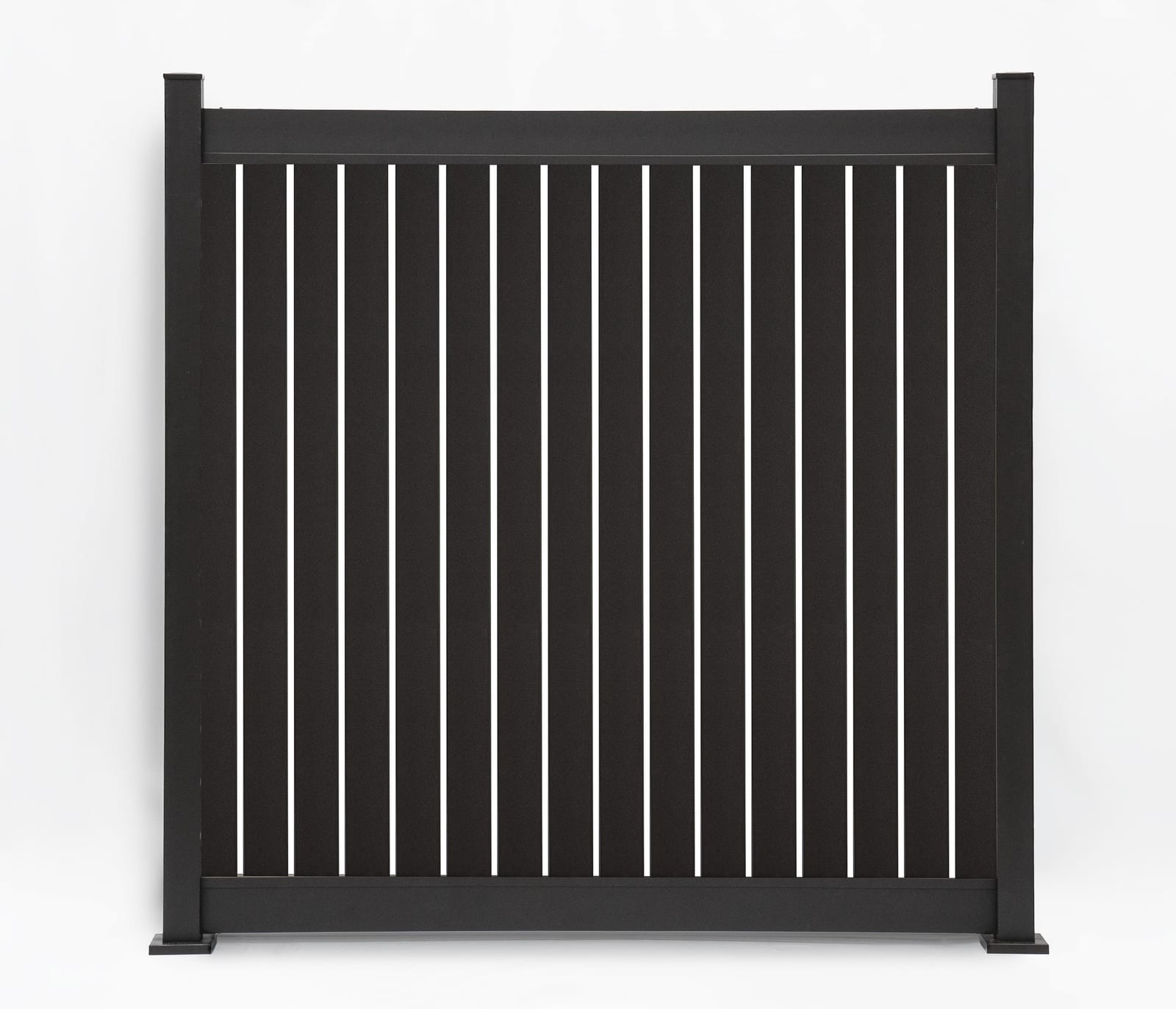
TL;DR
- Freestanding or wall-mounted aluminum panel: most durable option, no in-ground footing required
- Fabric, bamboo, reed: cheaper upfront, usually replaced every 1 to 3 seasons in Canadian freeze-thaw climates
- Three configurations available: Semi-Privacy (airflow, partial block), Privacy (full block), Privacy Plus (foam-core, extra sound and thermal insulation)
- Standard panel size is 2.6 ft W × 6 ft H, custom sizing available for wider or narrower balcony spans
- Check your building's rules first: strata, condo boards, and some municipalities restrict what can be permanently attached to a balcony railing or wall
Freestanding, wall-mounted, or railing-mounted
A yard fence goes in the ground. A balcony screen can't, so the mounting method is the first real decision:
- Freestanding: the panel sits on its own base, similar to the studio configuration shown above, with no attachment to the building itself. This is usually the easiest option to get approved, since nothing is fastened to shared structure, and it can be repositioned or removed without leaving marks.
- Wall-mounted: the panel anchors to an exterior wall. More stable in wind than a freestanding unit, but it does involve fastening into the building, which is exactly the kind of change a condo corporation or landlord usually wants to sign off on first.
- Railing-mounted: the panel attaches to the top or face of an existing railing. Common on townhomes and low-rise balconies, but railing hardware, height, and load capacity vary enough between buildings that a generic bracket doesn't fit every case.
PrimeAlux's aluminum privacy screens use the same slide-lock panel system across configurations; which mounting method fits your specific balcony depends on the railing type, wall material, and what your building allows. Contact PrimeAlux to discuss the right configuration for your balcony before ordering.
Check before you install
This is the step that's easy to skip and the most likely to cause a problem later. Condo corporations, strata councils, and some municipalities regulate what can be attached to a balcony, height limits, approved materials, whether anything can project past the railing line, and in some buildings whether a freestanding screen is allowed at all. None of that is standardized nationally or even city to city, so there's no single number to give you here. Confirm the rule with your board, property manager, or landlord before you buy anything you plan to leave up permanently.
Choosing a configuration
PrimeAlux privacy screens come in three configurations, the same product family used across the fence and screen lineup:
| Configuration | What it does | Best fit |
|---|---|---|
| Semi-Privacy | Spaced slats block direct sightlines while keeping airflow and some light moving through | Smaller balconies where a fully solid panel would feel closed-in, or where wind loading is a bigger concern |
| Privacy | Solid slats with no gaps, full sightline block | Balconies facing directly into a neighbouring unit or a busy street |
| Privacy Plus | Foam-core construction adds rigidity plus extra sound and thermal insulation at the panel | Balconies where noise from an adjacent unit or the street is part of the problem, not just sightlines |
All three use the same 80 × 80 mm aluminum posts, reinforced top and bottom rails, and UV-resistant powder-coat finish, so the choice comes down to how much airflow, light, and sound control you want, not durability.
Wind, weight, and what the testing actually covers
PrimeAlux's privacy screens are built from the same tested aluminum system used across the fence line, wind-load tested to 220 km/h. Independent slat-load testing on the reinforced panel configuration also shows the following distributed-load results across common spans:
| Slat size | 6' span | 5' span | 4' span |
|---|---|---|---|
| 100 × 20 mm (H+ reinforced), horizontal load | 220 lbs | 319 lbs | 363 lbs |
| 100 × 20 mm (H+ reinforced), vertical load | 370 lbs | 504 lbs | 745 lbs |
Those figures describe the tested panel configuration and spans specifically, they're useful supporting evidence when comparing options, not a blanket guarantee for every installation. A freestanding or railing-mounted balcony setup sees different wind exposure than an in-ground fence, especially higher up a building, so confirm the right configuration and anchoring for your specific balcony with PrimeAlux rather than assuming the panel-level rating covers every mounting method.
Frequently Asked Questions
What's the standard panel size for a balcony privacy screen?
2.6 ft wide by 6 ft high is the standard PrimeAlux panel size, with custom sizing available for wider or narrower balcony spans.
Do I need approval to install a privacy screen on my balcony?
Often, yes. Condo corporations, strata councils, and some landlords restrict what can be attached to a balcony railing or wall. Check with your board or property manager before installing anything permanent.
What's the difference between Semi-Privacy, Privacy, and Privacy Plus?
Semi-Privacy uses spaced slats for partial privacy with airflow, Privacy uses solid slats for a full sightline block, and Privacy Plus adds a foam core for extra sound and thermal insulation on top of full privacy.
Can a privacy screen be freestanding on a balcony?
Yes, a freestanding configuration is often the easiest to get approved since nothing attaches to the building's structure, though wind exposure and floor loading should still be confirmed for your specific balcony.
Sources
- Panel specifications and configurations: PrimeAlux Aluminum Privacy Screens
- Wind-load rating: 220 km/h, tested aluminum panel system, see Privacy Fence Panel
- Slat load test data: PrimeAlux Slat Load Testing (Horizontal & Vertical)
This article is general information, not legal or engineering advice. Bylaws vary by municipality and change over time. Confirm current requirements with your local building department before construction. PrimeAlux is not liable for actions taken based on this content.