Vinyl Picket Fence for Front Yards: Styles and Sizing
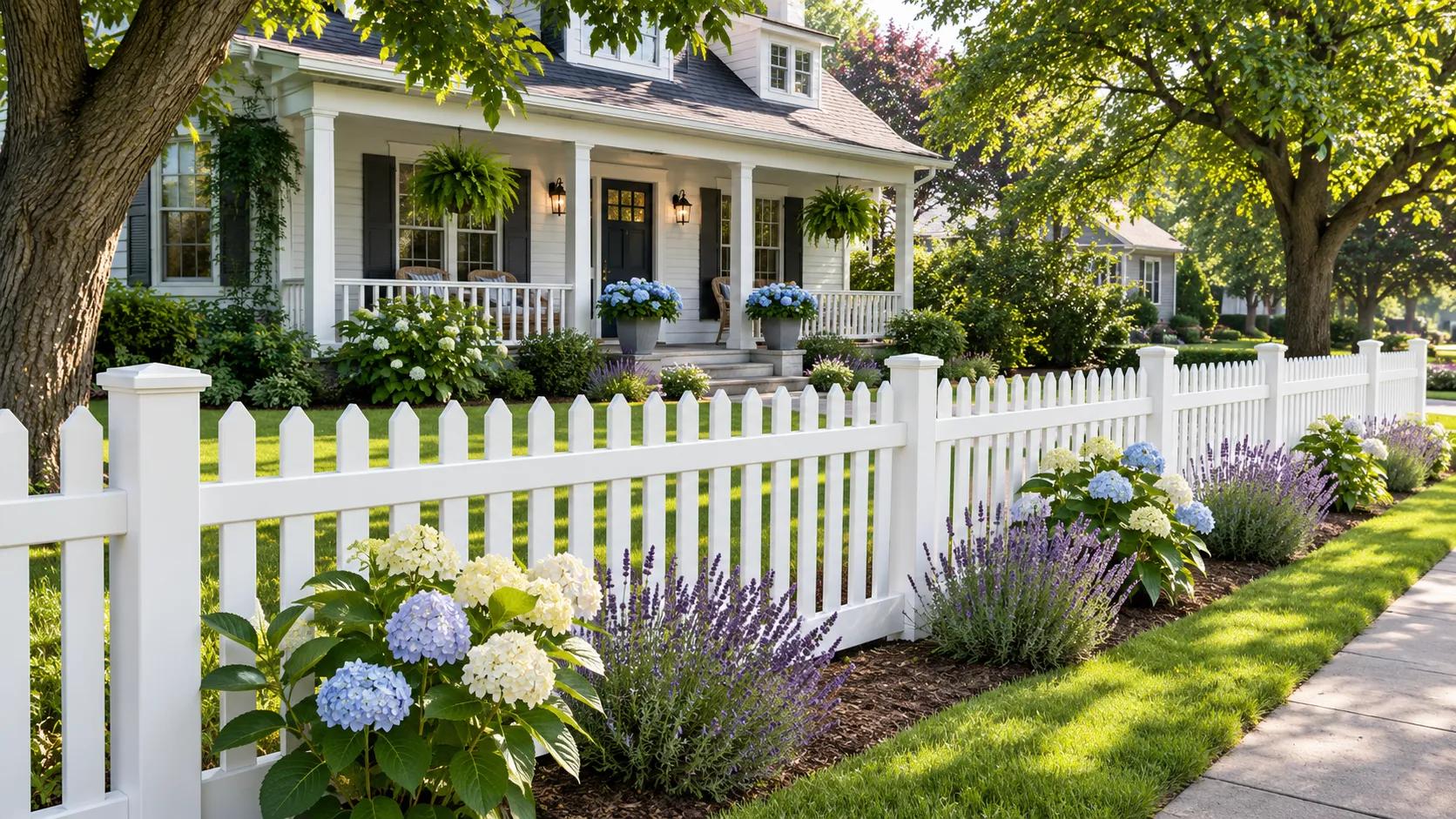
A vinyl picket fence is an open-style fence built from evenly spaced vertical pickets, most often used in front yards where a full privacy screen isn't the goal. PrimeAlux offers it in white, brown, and grey woodgrain. This guide covers what sets it apart from privacy-style fencing and what to work out before choosing it for a front yard.
Key facts
- Vinyl picket fencing doesn't require painting or staining the way a wood picket fence does.
- Picket fences are typically used in front yards, where municipal height limits are generally lower than in side and rear yards.
- An open picket fence generally carries less wind load than a solid panel of the same height and span, but that's a general tendency, not a guarantee, and it isn't something ASTM F964-13(2024) (the rigid-PVC fencing standard) tests for.
Explore current styles and request pricing
PrimeAlux prices vinyl fencing by quote rather than listing fixed prices, so the fastest way to see current styles and request pricing for your project is directly through PrimeAlux's vinyl picket fence.
What makes a picket fence different from a privacy fence?
A picket fence is open by design, meant to mark a boundary and add curb appeal without blocking the view in either direction. That makes it a common choice for front yards, where sightlines to the street and from the house usually matter more than full enclosure. A privacy fence, by contrast, is built to block the view entirely and tends to go in side and rear yards instead.
What colours work for a picket fence?
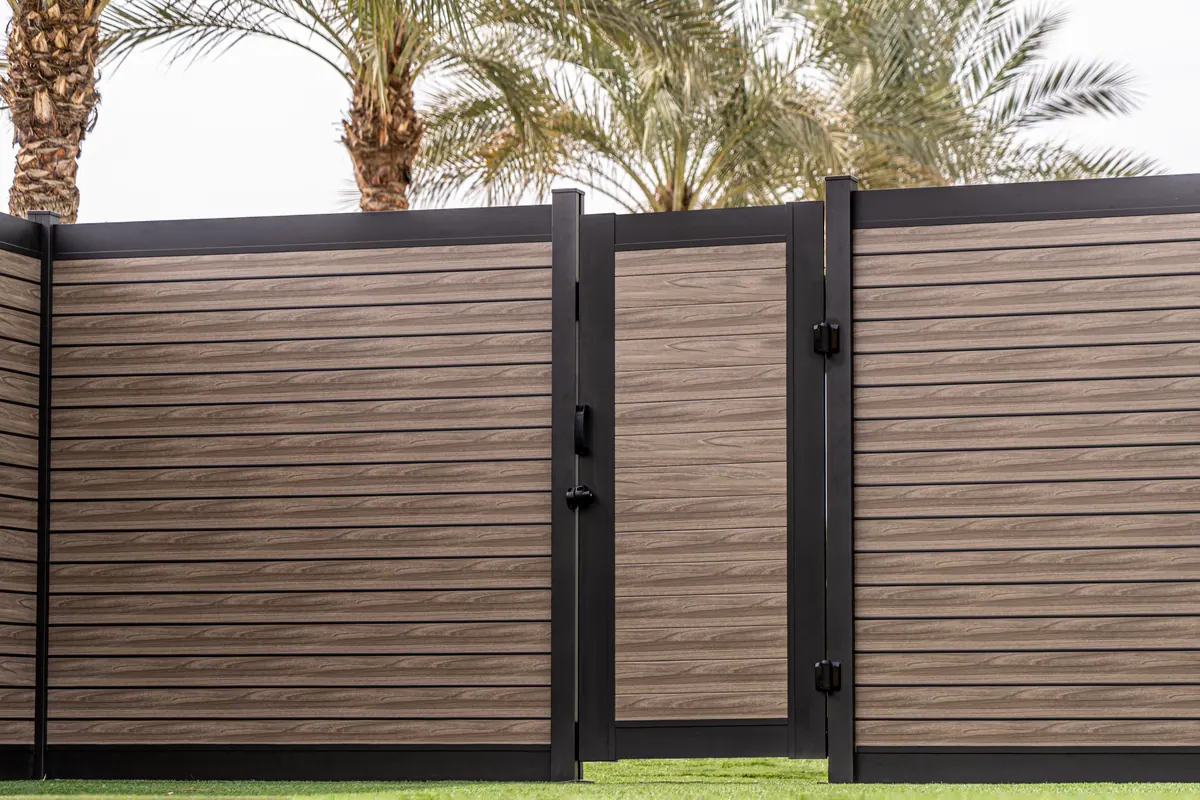
PrimeAlux's vinyl lineup comes in white, brown, and grey woodgrain. White is the classic picket-fence look and the colour most associated with the style historically. Brown and grey woodgrain read more like a natural wood finish without the upkeep a real wood picket fence needs.
Aluminum fencing from PrimeAlux
Planning for the long term? Choose aluminum.
- Aluminum does not rust or rot
- Limited warranty of up to 20 years
- Four standard colours
- Class A rated for fire and smoke - ASTM E84 (Privacy Slat | Flame Spread Index 0, Smoke Developed Index 50)
- 220 km/h wind rating (Privacy Plus | posts set underground, not base plate mounting)
- ASTM E90 | Acoustic Performance (Privacy Plus (6'W × 6'H) | STC 22 · OITC 19)
What should you actually plan for a picket layout?
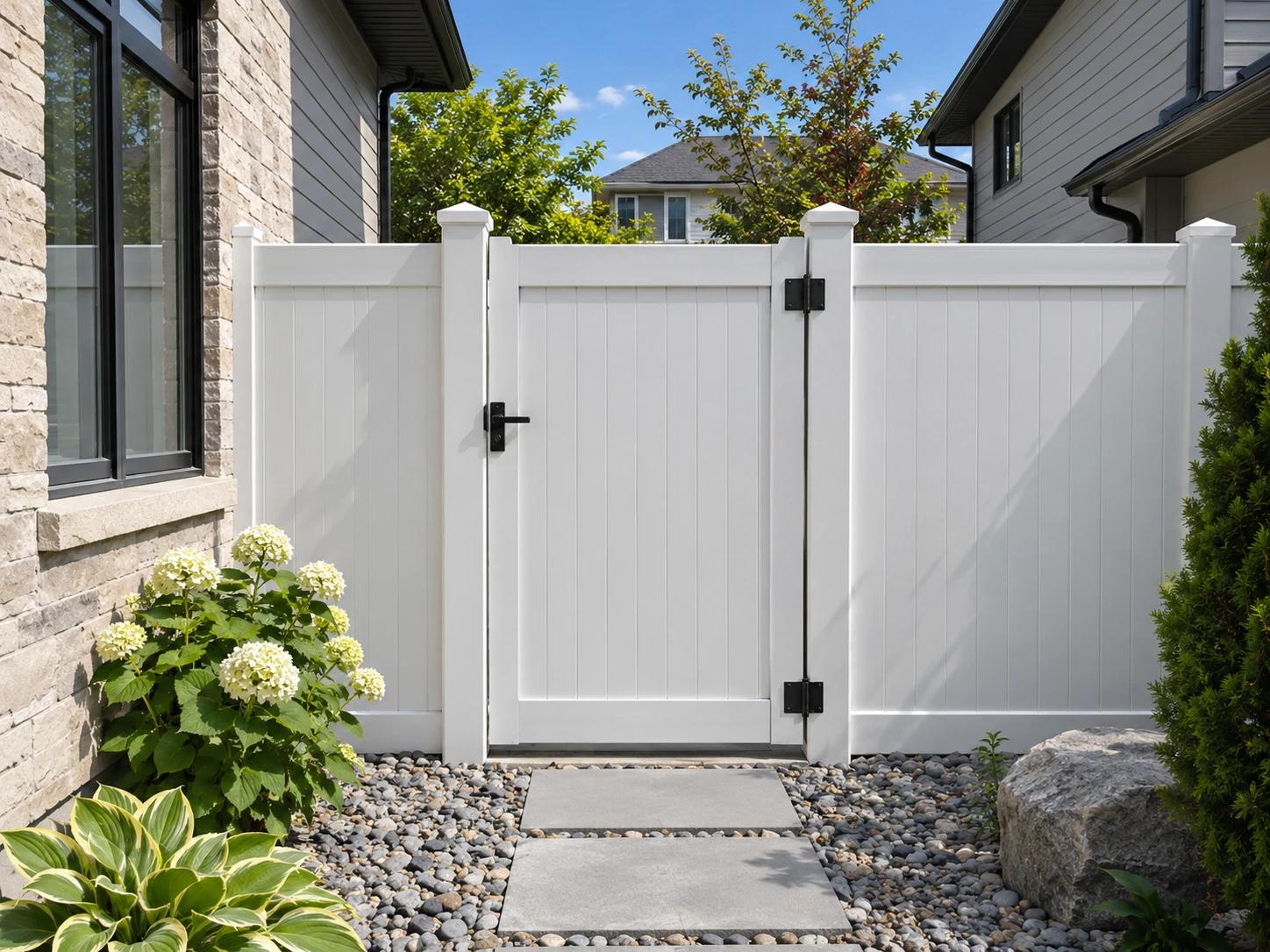
A picket layout comes down to a few practical decisions. Picket spacing is the main visual variable: a wider gap between pickets reads more open and uses fewer pickets per linear metre, while a tighter gap gives a more solid look that starts to approach semi-privacy; which reads better depends on how much sightline you want to keep open versus how much the fence should visually enclose the yard. Height relative to what your municipality allows in a front yard is the second major variable, and where gate openings need to sit for walkways and driveways is the third. PrimeAlux hasn't published exact picket spacing or post-spacing specifications for this line, so before requesting a quote it's worth having on hand: your front yard's total run length, where any gate openings need to go, and roughly how open versus solid you want the spacing to look, so those dimensions can be confirmed and matched to an actual product rather than assumed. Because it's an open design rather than a solid panel, a picket fence also generally sees less wind load than a full privacy run over the same span, which is one reason it suits exposed front yards, though wind load isn't addressed by ASTM F964-13(2024), the general rigid-PVC fencing standard, so it isn't a substitute for a structural assessment where that matters.
Where does aluminum fit?
PrimeAlux's current aluminum lineup is built around privacy, semi-privacy, and screen panels rather than an open picket-style profile, so if a true picket look is the goal, vinyl is the more direct match in PrimeAlux's current product range. For other front-of-property fencing needs, PrimeAlux's full fencing lineup covers PrimeAlux's broader catalogue of styles and materials.
How do you choose height and spacing?
Front yard fence height is typically capped lower than rear and side yard fencing under most Canadian municipal bylaws, often in the 1.0 to 1.3 metre range, specifically so sightlines at intersections and driveways aren't blocked. Confirm the exact limit and how it's measured for your property with your local municipality before finalizing a design. For a broader comparison of vinyl against composite and aluminum, see our full material comparison guide.
Get a quote
Want pricing for your yard?
Pricing is by quote. Send your measurements and the style you like through the contact form, or call (437) 333-3032.
What's next?
Once you know your front yard's length and preferred colour, get a quote to get pricing for your specific layout.
Copy my details for sales
- Customer type
- City and province
- Material
- Fence length
- Fence height
- Anything else we should know
This sheet builds text in your browser. Nothing is sent or saved. Copy the text into your message or email to us.
Frequently Asked Questions
What colours does vinyl picket fencing come in?
White, brown, and grey woodgrain.
Is a vinyl picket fence as tall as a privacy fence?
Usually not. Picket fences are typically used in front yards, where municipal height limits are generally lower than in side and rear yards. Confirm the exact limit for your property with your municipality.
Does a vinyl picket fence need painting like a wood one?
No. Vinyl picket fencing doesn't require painting or staining the way a wood picket fence does.
Does an open picket design meet structural wind-load requirements automatically?
Not automatically. An open picket fence generally carries less wind load than a solid panel of the same height and span, but that's a general tendency, not a guarantee, and it isn't something ASTM F964-13(2024) (the rigid-PVC fencing standard) tests for. Confirm with your installer if wind exposure is a concern for your site.
Sources
- ASTM International, F964-13(2024): Standard Specification for Rigid PVC Exterior Profiles Used for Fencing and Railing. https://store.astm.org/standards/f964
Published .
This article is general planning information. Product specifications come from the PrimeAlux product pages and may change. Confirm dimensions, mounting and installation details with PrimeAlux before ordering, and check your local bylaws and permit requirements. This is not engineering or legal advice.