Front Yard Fence in Canada: Height Rules, Styles, and Curb Appeal
Quick summary
A front yard fence sets the tone for your whole property, but it has to clear two hurdles at once: your municipal by-law and your curb appeal goals. Most Canadian cities cap front yard fence height, and corner lots face stricter sight-line rules. Aluminum is the strongest year-round choice because it holds its finish through freeze-thaw cycles, needs no staining, and resists the warping and rot that wreck wood and vinyl within a few seasons. Expect roughly $80 to $120 per linear foot installed for a quality aluminum fence in Canada. Confirm your local height limit before you buy, then pick a style (semi-privacy, ornamental, or full privacy) that fits both the rules and the look you want.
A front yard fence is the first thing people see when they pull up to your home, and it does more than mark a boundary. It frames the entrance, adds a layer of security, and can lift the look of the whole street-facing elevation. The catch is that front yards are also where municipal rules are tightest, so the fence that looks perfect in a catalogue may not be legal at the height you want. This guide walks through the height rules, the styles that work best up front, the materials worth your money in Canadian weather, and what a project actually costs.
What is the best fence for a front yard in Canada?
For most Canadian front yards, a powder-coated aluminum fence in a semi-privacy or ornamental style is the best balance of looks, durability, and by-law compliance. It stays within typical height limits, keeps sight lines open on corner lots, and holds its colour and shape through decades of freeze-thaw cycles without the maintenance that wood and vinyl demand.
Front yards reward fences that look intentional from the curb and survive the climate. Wood can look sharp on day one, but it greys, cracks, and warps quickly in Canadian conditions. Vinyl turns brittle in deep cold. Aluminum keeps a clean, finished face year after year, which matters most on the part of your property everyone sees. If you want a deeper style breakdown, our guide to aluminum fence styles covers each option in detail.
Front yard fence height rules in Canada
Front yard fence height is set by your municipality, not by a national standard, and front yards almost always have a lower limit than back yards. In Mississauga, for example, fences are generally capped at 2 metres (about 6 feet 7 inches), and inside a corner-lot sight triangle that drops to 1 metre (about 3 feet) so drivers and pedestrians can see clearly. Always confirm your own city’s number before you order.
The rules exist mainly for safety and visibility. On a corner lot, the area near the intersection is a “sight triangle,” and a tall solid fence there can hide a child stepping off the curb or a car pulling out. That is why open or low fencing is required in those zones. You can read the official details on the City of Mississauga fences page and the City of Toronto fences by-law. Limits and definitions differ between cities, so treat these as examples and check your local by-law.
If a strict front yard height limit rules out full privacy, a semi-privacy panel is often the smart move. It gives you a defined edge and some screening while staying within the rules. The aluminum fence height guide for Canada goes deeper on measuring and compliance.
Best front yard fence styles
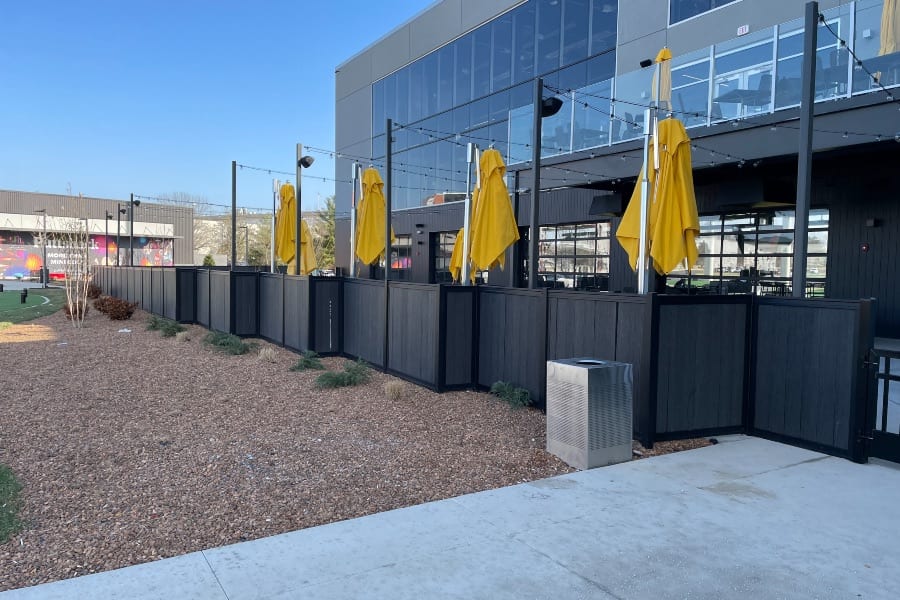
The three styles that work best in a front yard are semi-privacy, ornamental, and low full-privacy, with the right pick depending on your height limit and how much screening you want. Semi-privacy suits open suburban lots, ornamental fits heritage and traditional streetscapes, and a low privacy panel works where the by-law allows it and you want a stronger sense of enclosure.
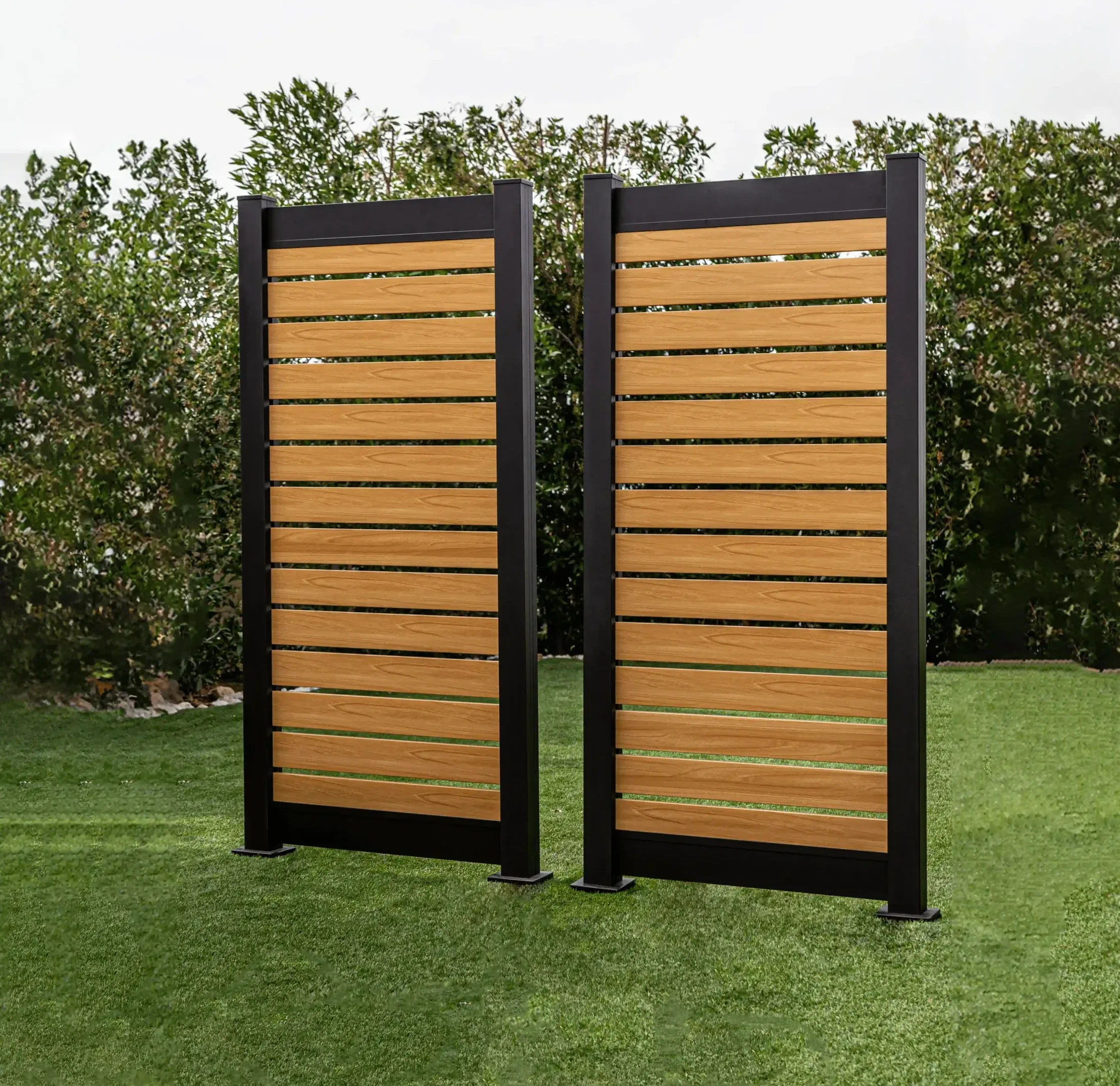
Semi-privacy aluminum panels use spaced slats, so you get definition and partial screening without a solid wall that could trip a sight-line rule. Ornamental aluminum reads as classic and formal, which works well with brick and stone fronts. Where a city allows a taller solid fence up front, a Privacy Plus horizontal panel gives a modern, architectural face, and a full aluminum privacy fence suits properties that need maximum screening. All of these come in wood-grain finishes (Natural Walnut, Grey Walnut, Walnut, Dark Walnut, and Grey Brown) applied through a three-layer coating process, so you get the warmth of wood without the upkeep. A matching aluminum gate ties the entrance together for a complete front entry.
Front yard fence materials compared
Aluminum outperforms wood, vinyl, and chain link in a front yard because it keeps its appearance with zero refinishing, which is exactly what the street-facing side of your home needs. Wood and vinyl can cost less up front, but both show their age quickly and carry ongoing maintenance or replacement costs that aluminum avoids.
| Material | Typical Canadian lifespan | Appearance over time | Maintenance |
|---|---|---|---|
| Aluminum | 25+ years | Holds finish and colour consistently | None beyond occasional cleaning |
| Cedar wood | 8 to 12 years structural | Cracks, warps, and greys within 1 to 2 seasons | Stain every 2 to 3 years |
| Pressure-treated wood | 7 to 10 years | Greys, cracks, and warps quickly | Regular treatment; posts rot below grade |
| Vinyl | About 10 years before issues | Fades, yellows, becomes brittle | Cleaning; cannot be repaired once cracked |
| Chain link | Long but industrial | Looks utilitarian from day one | Low, but rusts and sags over time |
The lifespan gap matters more in a front yard than anywhere else. A back fence can look tired and few people notice. A front fence that is cracking and grey drags down the whole property. Cheaper imported vinyl can fail well before the ten-year mark, and once a vinyl section cracks in cold weather it cannot be repaired, only replaced. For a fuller breakdown, see our comparison of aluminum vs wood fence.
How much does a front yard fence cost in Canada?
A quality aluminum front yard fence typically runs about $80 to $120 per linear foot installed in the Canadian residential market. The final number depends on panel height, style, terrain, gate count, and finish. Front yards are often shorter runs than back yards, so the total project cost can be lower even at the same per-foot rate.
It helps to compare on total cost of ownership, not just the first invoice. Wood looks cheaper at install, then adds the cost of stain, labour, and eventual board and post replacement. Aluminum front-loads more of the cost and then asks almost nothing of you afterward. For the full picture, our aluminum fence cost guide for Canada breaks down what drives the number. Exact pricing for a specific height and style is best confirmed with a quote.
Why aluminum holds up in Canadian front yards
Aluminum is built for the exact stresses a Canadian front yard faces: freeze-thaw movement, wind, road salt, and UV. It will not rot below grade, will not absorb water and swell, and will not become brittle in deep cold the way vinyl does. That is why it keeps a clean face on the most visible part of your property for decades.
PrimeAlux panels are engineered and tested for these conditions. They are wind-load tested to 220 km/h, and the Privacy Plus line uses a foam-core construction for added rigidity. The panels carry an ASTM E84 Class A fire rating, with a Flame Spread Index of 0 and a Smoke Developed Index of 50. The aluminum contains up to 70 percent recycled content, and you can read more about that material story through the Aluminum Association on recycling and Natural Resources Canada’s aluminum facts. The fire rating is verified to ASTM E84. Posts are set to a 3 ft burial depth, and panels come in sizes from 4’x6′ up to 8’x8′, with custom sizes available.
Low maintenance is the long-term payoff. There is no staining schedule, no sanding, and no board replacement. An occasional rinse keeps it looking new, which is covered in our aluminum fence maintenance guide. Many homeowners switch from wood for exactly this reason.
Front yard fences and curb appeal
A well-chosen front yard fence can strengthen curb appeal and support resale value, as long as it looks current and stays in good condition. A clean, modern aluminum line reads as a maintained, considered property, while a sagging or weathered fence does the opposite and can work against you at sale time.
Buyers notice the entrance first. A finished, consistent fence signals that the rest of the home has been cared for. Because aluminum holds its appearance, it keeps delivering that signal for years rather than peaking in the first season and declining after. We dig into the resale angle in our look at whether a privacy fence increases home value. To explore the company and product range behind these systems, visit the PrimeAlux homepage.
Frequently asked questions
How tall can a front yard fence be in Canada?
It depends on your municipality. Many Canadian cities limit front yard fences more strictly than back yards, and corner lots face tighter sight-triangle rules. In Mississauga the general cap is about 2 metres, dropping to 1 metre inside a sight triangle. Always confirm the exact limit with your local by-law before buying.
Do I need a permit for a front yard fence?
Permit rules vary by city. Some municipalities require a permit only above a certain height or for corner lots, while others do not require one for a standard residential fence. Check your local building or by-law department first, since requirements and exemptions differ across Ontario and the rest of Canada.
What is the best low-maintenance front yard fence?
Powder-coated aluminum is the lowest-maintenance option for a front yard. It does not rot, warp, or need staining, and an occasional rinse keeps it looking new. Wood requires regular staining, and vinyl can crack in cold and cannot be repaired once damaged, making both higher-effort choices over time.
Is aluminum or vinyl better for a front yard fence?
Aluminum is the stronger long-term choice. Vinyl can look fine early but becomes brittle in deep cold, fades over time, and cannot be repaired once a section cracks. Aluminum holds its finish, resists impact better, and lasts 25 years or more, which suits the most visible side of your home.
Can I have a privacy fence in my front yard?
Sometimes, but height limits often make full privacy difficult up front. Where the by-law allows it, a low privacy or semi-privacy panel can work. On corner lots, sight-triangle rules usually require open or low fencing near the intersection, so a semi-privacy style is frequently the most practical compliant option.
How much does a front yard fence cost in Canada?
A quality aluminum front yard fence generally costs about $80 to $120 per linear foot installed. Height, style, terrain, gates, and finish all affect the total. Front yard runs are often shorter than back yards, so the overall project can be more affordable even at the same per-foot rate.
What colour front yard fence is most popular?
Dark, neutral wood-grain tones are the most popular for front yards because they suit a wide range of home exteriors. PrimeAlux offers Natural Walnut, Grey Walnut, Walnut, Dark Walnut, and Grey Brown, applied through a three-layer coating that resists fading far better than painted wood.
Choosing the right front yard fence
The best front yard fence is the one that meets your city’s height and sight-line rules, suits the look of your home, and keeps that look for decades without constant upkeep. Aluminum delivers on all three, which is why it has become the default choice for Canadian homeowners who want their front yard to look finished year after year. Start by confirming your local height limit, then choose a semi-privacy, ornamental, or low privacy style that fits. To plan your project or get a quote tailored to your property, contact PrimeAlux or visit the Mississauga showroom to see the finishes in person.