Decorative Fence Panels in Canada: Adding Style Without Sacrificing Privacy
Quick Summary
Decorative fence panels in Canada combine visual style with full property protection. Aluminum decorative fence panels outperform wood, vinyl, and decorative wrought iron in cold-weather durability, finish retention, and long-term maintenance cost. Expect installed pricing of roughly $80 to $120 per linear foot for premium aluminum systems, panels available from 4 by 6 up to 8 by 8 feet, and finishes that hold colour for 25 years or more. Choose decorative aluminum panels when you want the look of a custom-designed fence without the seasonal upkeep wood and vinyl demand.
What Are Decorative Fence Panels?
Decorative fence panels are pre-engineered fence sections designed to do two jobs at once: define a property line and act as a deliberate visual feature of the home and yard. They differ from plain pickets or chain link by using considered slat patterns, frame profiles, infill geometry, or finish colours that contribute to curb appeal rather than blending into the background.
In the Canadian residential market, decorative fence panels typically come in four material families. Wood is the traditional option, vinyl is the lower-priced plastic alternative, wrought iron and steel cover the heavy ornamental segment, and aluminum is the modern choice that combines the look of metal with the practical advantages of a lighter, corrosion-resistant material. The Aluminum Association notes that aluminum’s combination of strength and corrosion resistance makes it well suited to architectural applications exposed to weather.
For homeowners selecting aluminum fence styles, the decorative category covers everything from horizontal slat privacy panels with wood-grain finishes to ornamental open-pattern designs that pair well with traditional architecture.
Why Aluminum Decorative Fence Panels Make Sense in Canada
Aluminum decorative panels work in Canadian conditions because the base material does not rust, does not rot, and does not become brittle in cold weather the way vinyl can. The PrimeAlux system uses architectural aluminum extrusions tested to a wind load of 220 km per hour, finished with a three-layer coating process that holds colour through repeated freeze-thaw cycles.
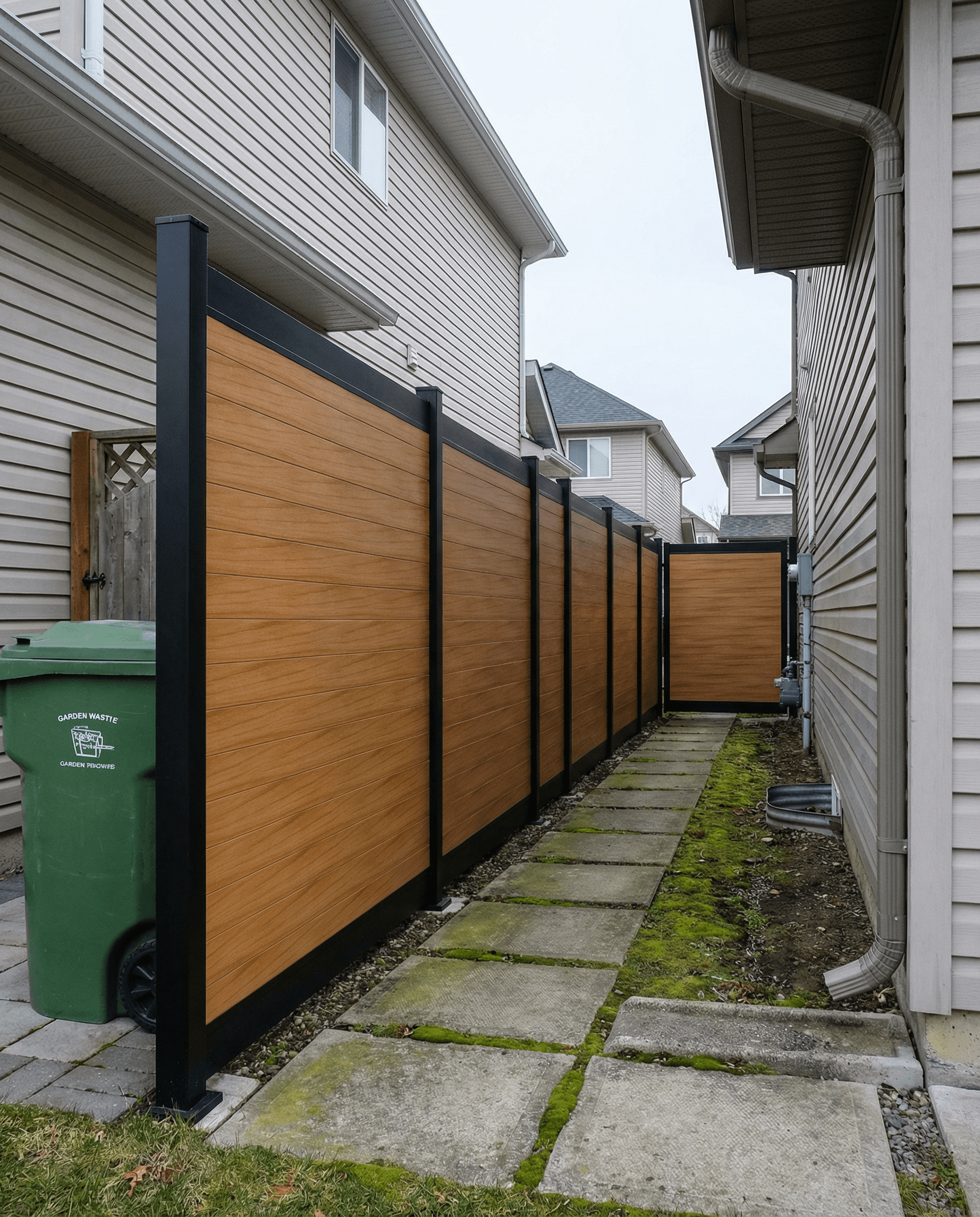
Compared with the alternatives, aluminum is the only mainstream decorative option that holds finish, profile, and structural integrity for the full lifecycle of most Canadian homeownership. Cedar and pressure-treated wood begin showing greying, cracking, and warping within one or two seasons even with regular staining. Vinyl yellows and becomes brittle below minus 20 degrees Celsius. Wrought iron is heavy and prone to surface rust at any cut or scratch.
Residential buyers who want a long-term decorative outcome usually arrive at aluminum after one bad experience with another material. The PrimeAlux line was built around that pattern: aluminum privacy fence panels, Privacy Plus foam-core panels, and semi-privacy panels are all engineered for cold-weather longevity.
Decorative Aluminum vs Wood, Vinyl and Wrought Iron
The four common decorative materials sit on different points of the cost-versus-longevity curve. Aluminum sits at the high-quality end with low ongoing maintenance. Wood is mid-priced upfront but expensive in maintenance time. Vinyl is the cheapest by ticket price, with the shortest aesthetic life. Wrought iron is the most expensive and the most maintenance-heavy of the four.
| Material | Typical Canadian Lifespan | Aesthetic Hold Time | Maintenance Reality | Decorative Strength |
|---|---|---|---|---|
| Aluminum (PrimeAlux) | 25+ years | Holds finish and profile consistently | Occasional rinse, no refinishing | Wood-grain, smooth, ornamental, modern horizontal |
| Cedar wood | 8 to 12 years structural | Greys and cracks in 1 to 2 seasons | Stain or paint every 2 to 3 years | Natural look short-term only |
| Pressure-treated wood | 7 to 10 years | Warping and surface checking common | Regular treatment to slow decay | Limited decorative range |
| Vinyl | ~10 years before cracking, fading | Yellows and dulls with UV | Cleaning only, but cannot be repaired once cracked | Limited colours, plastic appearance |
| Wrought iron / steel | Long if maintained | Surface rust at any scratch | Sanding and repainting on a recurring cycle | Strong ornamental tradition, heavy |
The numbers above reflect realistic Canadian residential performance. The 10-year vinyl figure assumes quality vinyl under normal conditions; cheaper imported vinyl, which dominates a portion of the market, can show cracking and brittleness much earlier. Wood may technically remain standing for the periods listed, but most homeowners describe it as visually finished within the first few seasons.
Decorative Style Options in Aluminum
Decorative aluminum is broader than most homeowners realize at first. The category covers solid-slat horizontal privacy designs, foam-core systems with wider faceless panels, semi-privacy with controlled airflow, ornamental picket-style fences, and full-frame architectural systems. The privacy fence panel buyer guide walks through the panel sizing and configuration choices in detail.
Three style directions cover most Canadian residential projects:
Modern horizontal slat: Tight horizontal slats running between substantial posts. Reads as architectural, complements contemporary builds. Available in solid, semi-privacy, and Privacy Plus foam-core constructions. Sizes from 4 by 6 up to 8 by 8 feet, with custom sizes available on request.
Wood-grain finish: Aluminum panel with a textured wood-grain coating that delivers cedar or walnut visual cues without any of the wood-fence maintenance cycle. The wood-grain aluminum fence guide covers the colour family in detail.
Ornamental picket and post: Open-pattern decorative fencing that suits front yards, garden boundaries, and pool surrounds where airflow and visibility matter. Pairs naturally with matching aluminum gates.
Pro Tip
If you are mixing styles within one yard, keep the post and frame profile consistent across the whole property. Vary the panel infill (solid, semi-privacy, ornamental) but anchor everything to one post system. The eye reads the posts as the structural rhythm of the fence; matching them creates a cohesive design even when panel styles change.
Decorative Fence Pricing in Canada
Premium decorative aluminum systems in the Canadian residential market typically install for roughly $80 to $120 per linear foot. The range covers panel construction (solid, foam-core, semi-privacy), height (most yards run 5 to 6 feet), terrain (level versus sloped), and gate count. For a 100-foot run that places most projects between $8,000 and $12,000 installed.
This range sits above pressure-treated wood, near or above quality vinyl, and below quality wrought iron. The cost difference closes quickly when factored against staining, repainting, and replacement cycles. The detailed Canadian aluminum fence cost guide covers the full pricing logic, and the pricing breakdown walks through what affects the final number.
Quote variation for decorative styles is mostly driven by panel choice and gate count. Ornamental picket runs slightly less than solid horizontal because there is less coated surface area; wood-grain finishes run slightly more than smooth black because the coating process adds a step.
Performance Specs That Decorative Buyers Should Know
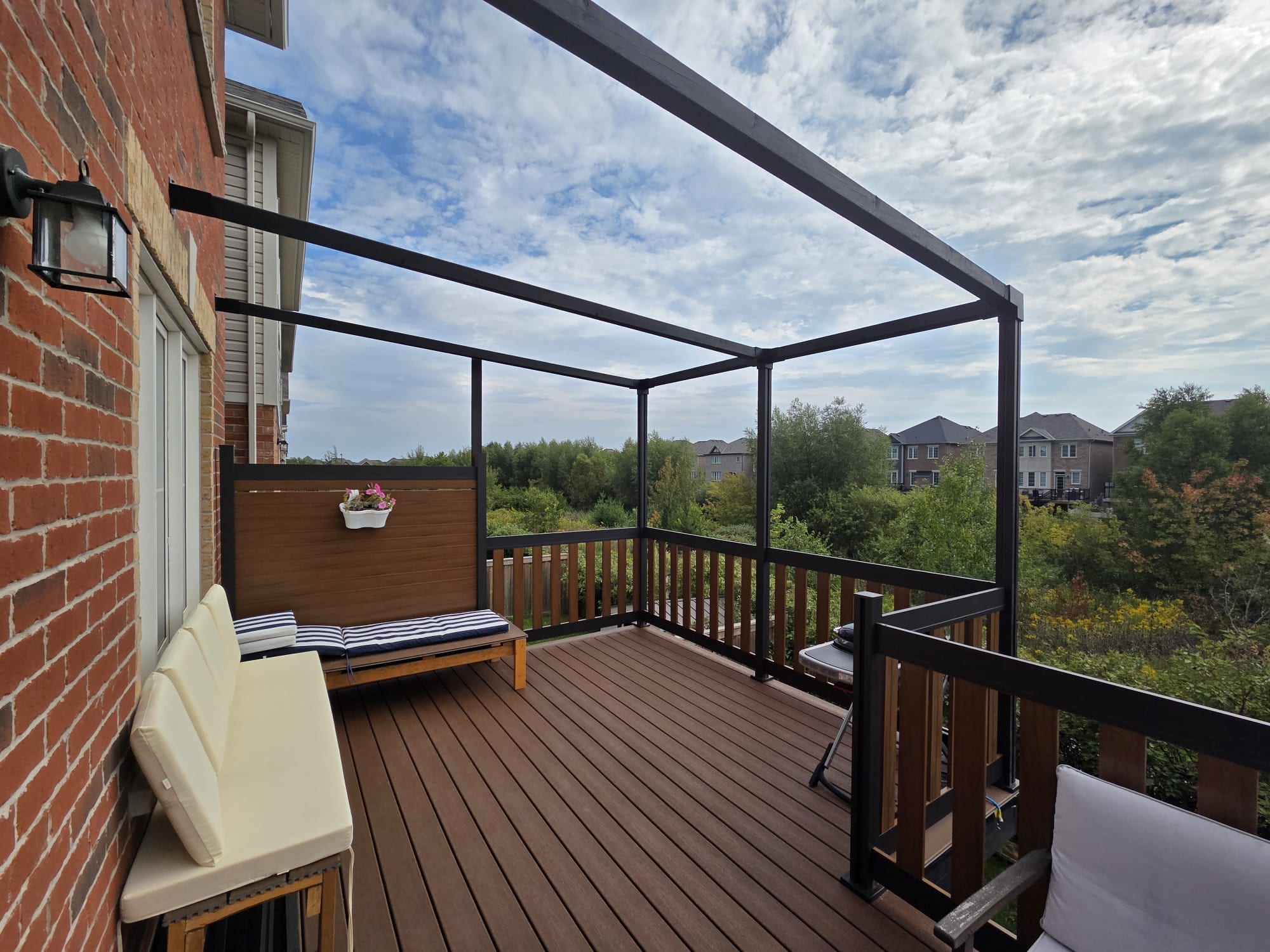
Decorative does not have to mean delicate. The PrimeAlux decorative line shares the same engineering as the privacy and semi-privacy product families:
Wind: Panels tested to 220 km per hour. That margin matters in southern Ontario, the Prairies, and exposed Atlantic coastal yards where peak gusts during severe weather can clear 100 km per hour. The aluminum fence lifespan guide covers the wear-curve in more detail.
Fire: Class A fire rating under ASTM E84. Flame Spread Index 0, Smoke Developed Index 50. Aluminum does not contribute to flame spread the way wood does, which matters for properties near wildland edges or for homeowners worried about backyard fire safety.
Coating durability: Three-layer coating process. Aluminum panels test against industry-standard adhesion (ASTM D3359) and colour-difference (ASTM D2244) methods used in architectural coating evaluation.
Material content: Up to 70 percent recycled aluminum. The International Aluminium Institute reports that aluminum can be recycled indefinitely without quality loss, which improves the sustainability case for an aluminum-based decorative system.
Decorative Panels and Curb Appeal Resale Value
Decorative fencing affects both perceived value and actual resale. Canada Mortgage and Housing Corporation housing research consistently identifies exterior condition and curb appeal as influential factors in how buyers price residential properties. A clean, intentional, well-finished fence reads as a sign of an owner who has taken care of the rest of the home.
The privacy fence and home value piece on this site looks at the resale signal in more depth. The takeaway: a decorative fence that still looks new at year five contributes positively, while a wood fence that is greying and warping by year three subtracts from the impression.
Installation Considerations for Decorative Aluminum
Aluminum decorative panels install faster than wood and faster than wrought iron because the components are pre-engineered for fit. A typical 80 to 120 foot residential run installs in one to two days for a competent two-person crew. Posts are set in concrete to a 3 ft burial depth in most Canadian regions, which keeps the system stable through frost-heave cycles. The Canadian frost line guide for fence posts and the aluminum fence installation guide cover the full sequence.
Two installation choices affect the decorative outcome:
Post placement: Standard panel-to-post spacing keeps the slat or pattern rhythm visually balanced. Off-spec spacing (cutting one short panel to fit) breaks the visual rhythm, which is the most common cosmetic mistake in DIY decorative installs.
Slope strategy: Aluminum decorative panels can either step (each panel level, with a stair effect) or rake (panel follows slope). Step works better for ornamental and modern styles. Rake works better for horizontal slat panels on gentle slopes.
Local code awareness matters too. Residential fence height bylaws vary across Canadian municipalities, with most jurisdictions capping front-yard fences at lower limits than backyards. The Canadian fence height guide covers the typical limits.
Choosing the Right Decorative Panels for Your Property
Picking the right decorative aluminum system comes down to four practical questions.
Where is the fence going? Front yard usually wants ornamental, semi-privacy, or short solid panels for visibility and bylaw compliance. Backyard usually wants taller solid or Privacy Plus panels for full screening. Pool areas need self-closing, self-latching gates that meet provincial code.
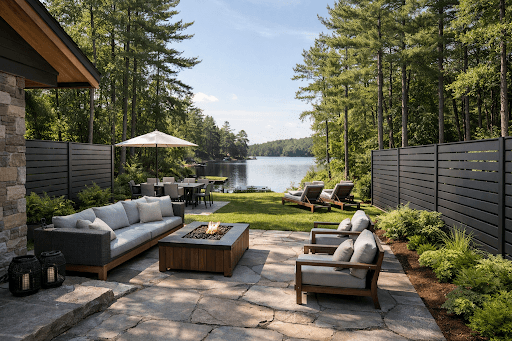
What aesthetic does the home call for? Modern builds match well with horizontal slat in matte black or smoke. Traditional homes often look better with wood-grain finishes (Walnut, Grey Walnut, Natural Walnut) or ornamental picket designs. Contemporary infills sit between the two.
How long do you want the look to last? If the answer is more than a decade, aluminum is the only material on the list that will still look considered after that span. Wood and vinyl will not.
What does the gate look like? The gate sets the tone of the whole fence visually. Match gates to the panel system, use the same post profile, and consider a hardware finish that complements the home’s exterior trim.
What to Watch Out For When Buying Decorative Fence Panels
The decorative fence category attracts a wide range of supplier quality. Three patterns are worth knowing about before you buy:
Material misrepresentation: Panels labeled simply “aluminum” can vary widely in alloy grade, wall thickness, and coating thickness. Look for specific panel construction details (foam-core or solid), confirmed wind-load testing, and a coating system with verifiable adhesion data. Vague claims like “premium-grade” without specifics usually point to thinner material than what you would expect.
Imported vinyl marketed as decorative: Some suppliers position cheap imported vinyl as “decorative fencing” by adding a printed wood-grain laminate. Those laminates fade unevenly within a few seasons. If a vinyl panel claims “wood-grain decorative,” ask about UV-stability data and check whether the supplier will commit to performance after five years.
Hidden maintenance disclosures: Wood and stain-finish vendors often advertise the upfront price without the staining, painting, or replacement cycle. Calculate the 10-year cost (initial install plus refinishing intervals) before comparing against aluminum’s no-maintenance reality. The aluminum fence maintenance guide spells out the actual care effort needed for an aluminum system, which is close to zero.
FAQ: Decorative Fence Panels in Canada
Are decorative aluminum fence panels strong enough for Canadian winters?
Yes. Quality aluminum decorative panels are tested for wind load (the PrimeAlux system is rated to 220 km per hour) and the material does not become brittle in cold the way vinyl does. Aluminum will not rot, warp, or rust, which makes it more cold-tolerant than wood, vinyl, or unprotected steel.
How much do decorative aluminum fence panels cost installed in Canada?
Premium decorative aluminum systems install for roughly $80 to $120 per linear foot in the Canadian residential market. A 100-foot run typically falls between $8,000 and $12,000 installed. Pricing depends on panel style, height, gates, and terrain. Contact a supplier for a project-specific quote.
Can decorative aluminum panels match my home’s design style?
Yes. Decorative aluminum is available in modern horizontal slat, traditional ornamental picket, semi-privacy, and full-privacy configurations. Finishes include matte black, smoke, and several wood-grain colours (Natural Walnut, Walnut, Grey Walnut, Dark Walnut, Grey Brown), which lets the system suit modern, contemporary, and traditional home styles.
Do decorative aluminum fence panels fade or require repainting?
Quality aluminum panels use a three-layer coating designed to resist UV fading and abrasion. Most owners do not repaint. Occasional rinsing keeps the surface clean. Decorative wrought iron, by contrast, requires a recurring sand-and-repaint cycle wherever the finish is scratched.
Are decorative aluminum panels suitable for pool fencing?
Aluminum is a strong fit for pool surrounds because it does not corrode in chlorine-adjacent or moisture-heavy environments. Pool installations require self-closing, self-latching gates and minimum heights set by provincial code. The pool fence Canada guide covers compliance.
How deep should fence posts be set for decorative aluminum panels in Canada?
Posts are set in concrete to a 3 ft burial depth in most Canadian regions. That depth keeps the panel system stable through frost heave and meets typical residential code requirements. Some regions with deeper frost lines may require deeper footings. A qualified installer confirms based on local soil and frost data.
Can I install decorative aluminum panels myself?
The PrimeAlux panel system is installer-friendly because the components are pre-engineered for fit. Confident DIYers handle short runs successfully if they have access to post-setting tools and a level reading. Long runs, sloped terrain, and matched-gate installations are usually handled faster and more cleanly by a professional crew.
How long do decorative aluminum panels last in Canadian conditions?
Quality aluminum panels last 25 years or more with the finish, structure, and visual quality intact. That outlasts cedar (8 to 12 years structural, far less aesthetically), pressure-treated wood (7 to 10 years), vinyl (about 10 years before cracking and fading begin), and unprotected steel (corrosion-driven decline). Aluminum is the longest-lasting decorative option for the Canadian residential market.
Bringing It All Together
Decorative fence panels are about getting two outcomes from one investment: a defined property line and a deliberate visual feature. In the Canadian residential market, aluminum is the only mainstream option that delivers both of those outcomes for the full lifecycle of typical homeownership. Wood looks tired within two seasons. Vinyl yellows. Wrought iron rusts and demands maintenance. Aluminum holds.
If a decorative fence is on the planning list this season, the practical next step is to look at panel construction (solid, semi-privacy, Privacy Plus foam-core), pick a finish (smooth black, smoke, or one of the wood-grain colours), and request a project-specific quote that reflects the actual run length, terrain, and gate count for the property. Browse the aluminum privacy fence range, the semi-privacy line, and the aluminum gate options to see how the styles look in finished installations, or contact PrimeAlux to start a quote for your property.