These points come from the City of Calgary and Environment and Climate Change Canada. The City’s web copy of the Land Use Bylaw is not an official interpretation, so confirm with the City before you order.
Fence and gate heights
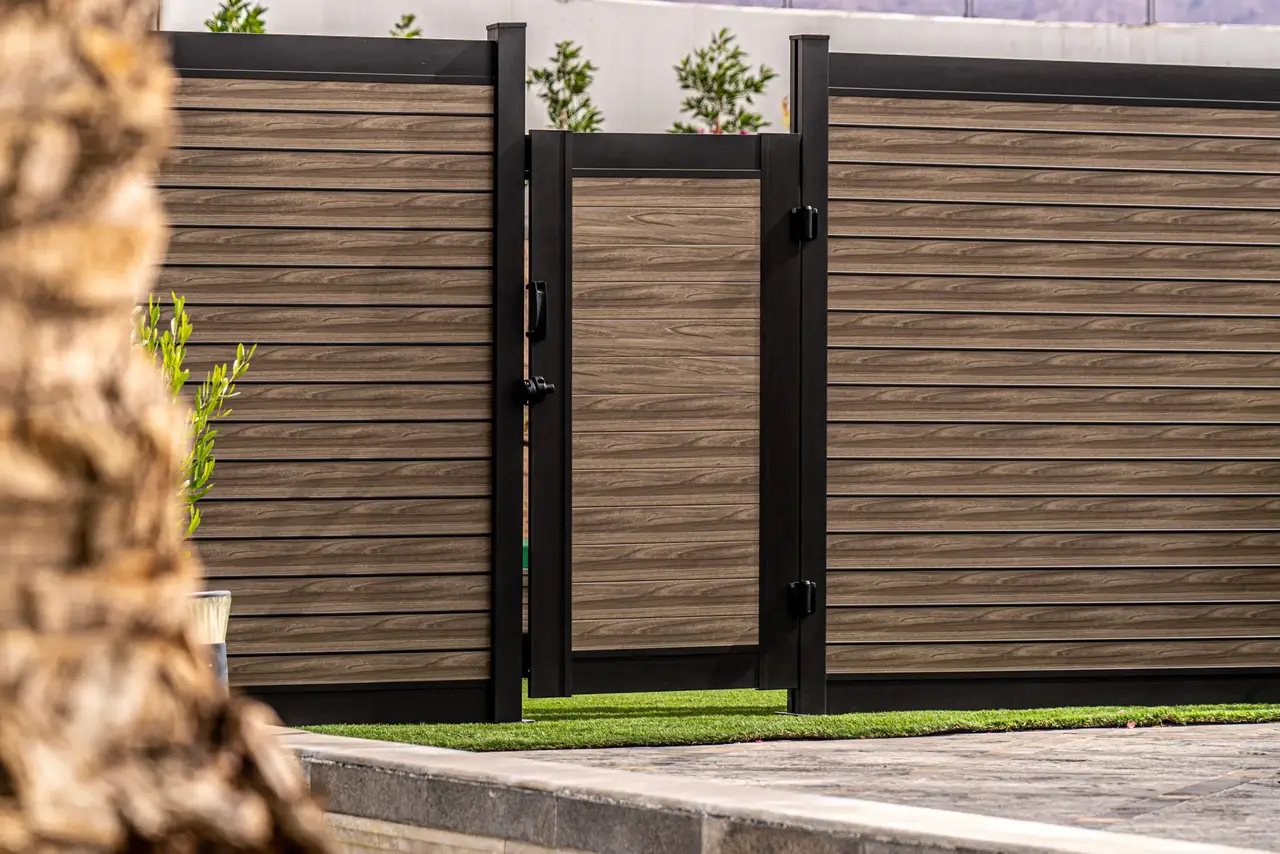
Calgary’s Land Use Bylaw 1P2007 allows a fence up to 1.2 m high in the front portion of a lot, which runs from the foremost front facade of the main residential building to the front property line. In all other cases the limit is 2.0 m. A gate may reach 2.5 m at its highest point if it is not more than 2.5 m long. Height is measured above grade at any point along the fence line.
Source: City of Calgary, Land Use Bylaw 1P2007, section 343
When a permit applies, and the corner triangle
The City says that in most situations a fence does not need a building permit. A fence that does not meet the Land Use Bylaw needs planning approval, which is a development permit. The City lists the usual triggers as a rear yard fence over 2 m (6 ft 6 in), a front yard fence over 1.2 m (4 ft), a fence inside a corner visibility triangle over 0.75 m (2 ft 6 in), and a gate over 2.5 m (8 ft 2 in). New fences may not extend onto City of Calgary property. Ask the City for the triangle’s dimensions on your corner lot.
Source: City of Calgary, Fences
Chinooks and freeze-thaw
The City’s Climate Projections for Calgary report (January 2024) calls chinooks a significant driver of the city’s winter freeze-thaw cycles, which it defines as air temperature fluctuating between freezing and non-freezing temperatures. Its modelled average is 43.5 cycles in winter (December to February) and 107.4 a year. Those figures cover the 1981-2010 baseline period and are modelled, so they are not directly comparable with the 1991-2020 climate normals below. Aluminum does not absorb moisture, so freeze-thaw cycles do not crack or warp it.
Source: City of Calgary, Climate Projections for Calgary (January 2024)
Calgary against Toronto Pearson
At Calgary Int’l A (ECCC climate ID 3031093), the 1991-2020 normals show a January mean daily temperature of -7.6 °C, against -5.0 °C at Toronto Pearson. Calgary has 192.7 days a year with a daily minimum at or below 0 °C, against 130.6 at Pearson, and 21.6 days with a daily minimum below -20 °C, against 2.7. Annual snowfall is 138.7 cm against 114.5 cm, yet January snowfall is lower in Calgary, at 16.6 cm against 31.5 cm.
Source: Environment and Climate Change Canada, Canadian Climate Normals 1991-2020, Calgary Int’l A
Where Calgary is still building
The City’s 2022 suburban growth report names communities in north, northeast and southeast Calgary. Nolan Hill and Evanston in the north were close to full build-out, Livingston and Carrington were still developing, and Glacier Ridge was in its early stages. Mahogany and Seton in the southeast, and Cornerstone in the northeast, are on the report’s lists of new communities. The status labels date from 2022, so check the City’s new community page for the current picture.
Source: City of Calgary, Suburban Residential Growth 2022-2026
Getting panels from Mississauga
Our showroom is at 2222 South Sheridan Way, Unit 116, in Mississauga, Ontario, 3,387.7 km from central Calgary by road on a routing model (OSRM, no stops). PrimeAlux ships to Calgary from there, and there is no local branch or install crew. The showroom is in Ontario, so a visit means travelling there; free samples are available. Delivery options, dates and fees are confirmed by our sales team.
Source: OpenStreetMap routing (OSRM)